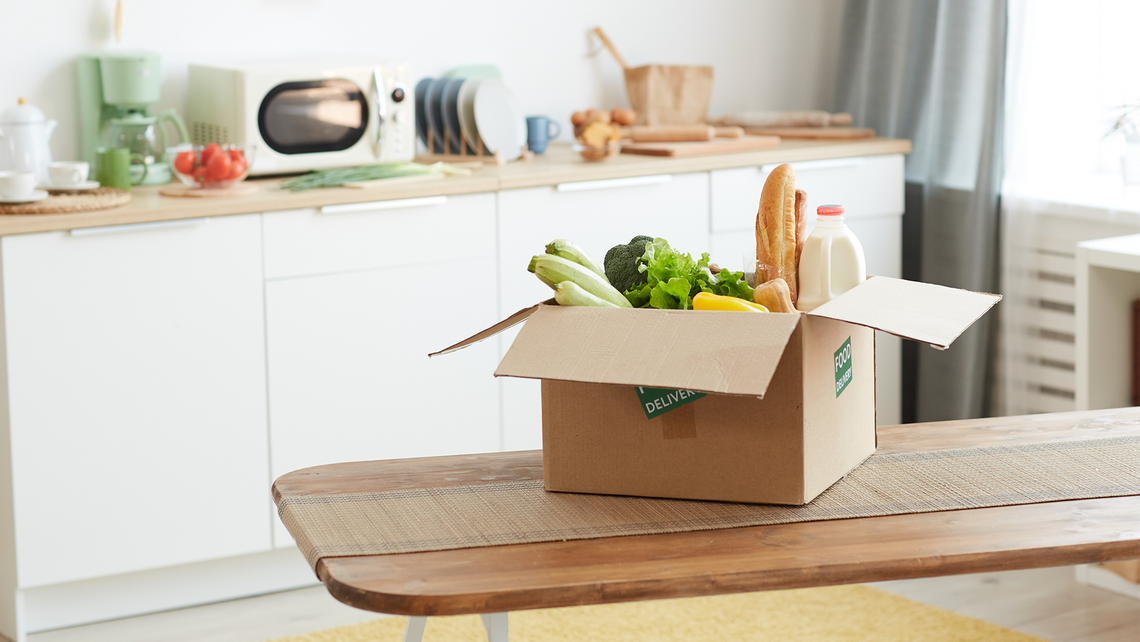

Most grocery distribution centers were built around a single mission: moving full cases to retail stores. Equipment, zone layouts, and labor models all reflect that purpose, and the model served the industry effectively for decades. Shopping behavior has since reset on a structural level. A hybrid shopper now splits the basket across channels and across multiple stores, mixing curbside pickup, same-day delivery, and in-store trips within a single week. Material handling strategy has to answer that fragmentation, because the same building now assembles full-case shipments for shelves and individual units for consumers.
Margins remain razor thin, and any added cost risks reaching price-sensitive shoppers who will move to a competitor without hesitation. TGW Logistics works alongside grocery retailers who manage this reality every day, and the central question for operators is whether to run parallel systems or unify them under a single architecture. A unified floor is less a convenience and more a strategic necessity to hold loyalty that has fragmented for good.
Why Grocery Fulfillment Resists Two Parallel Systems
Split-case and full-case fulfillment have different equipment requirements, different zone logic, and different throughput profiles. Running them as separate systems means designing, staffing, and maintaining two distinct operations inside one building. Order picking strategy sits at the center of this rigidity, because the way product moves to the operator dictates how flexible the entire floor can be. That rigidity bites hardest against a structurally broken labor market, where chronic shortages and a widening labor cost gap make duplicated staffing a liability rather than a routine expense.
Running parallel systems surfaces concrete operating costs:
- Duplicated capital investment across two distinct platforms
- Labor pools that cannot shift between channels when volume spikes, which compounds the strain of an already tight labor market
- Inventory pools effectively managed twice despite serving one product base
- Separate management attention required for each parallel track
- Distinct training programs for the staff assigned to each system, a recurring cost in a market where qualified labor stays scarce
Grocery raises the stakes further. Operations span ambient, chilled, and freezer zones, and a mis-pick generates more than a return. It can lead to spoilage and food safety concerns. Every system handoff adds another point where cold chain integrity may slip. A floor built around two parallel systems also locks the operation into rigid capacity. Omni channel demand shifts week to week in grocery, and neither system can absorb the swing on its own, which makes the mismatch a recurring operational tax that grows alongside online volume. Operating budgets pay the cumulative price.
How a Unified Order Picker Transforms Omni Channel Logistics
A unified system handles split-case and full-case picking within a single architecture. That means one set of equipment, one labor pool that flexes across channels, and one capital investment rather than two competing budget lines. The result is a floor that responds to demand shifts as a single, coordinated operation. Omni channel logistics improves the moment retailers stop treating retail and ecommerce fulfillment as separate problems requiring separate hardware.
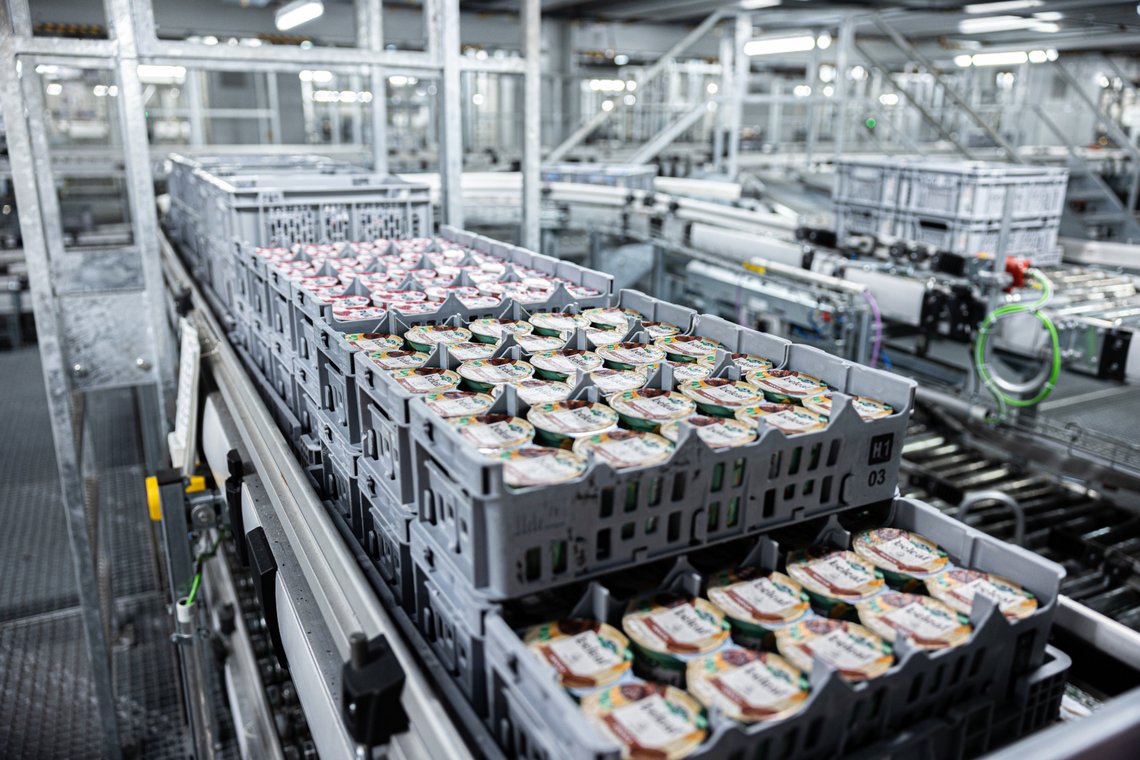
TGW FullPick brings this approach to grocery operations. The solution is modular and configurable across ambient, chilled, and freezer environments, and it manages both picking modes within one storage and retrieval engine. The same architecture absorbs shifting product assortments with ease, including the lighter and non-standardized packaging common to private label goods, through flexible tray handling and automated palletizing stations. That flexibility matters as private label keeps gaining share and roughly half of shoppers actively reach for it.
Retailers can standardize automation across temperature zones, eliminate duplicate inventory storage, and reduce the complexity of juggling separate platforms. Throughput climbs because the floor stops fighting itself. TGW Logistics has refined this configuration over 25 years of grocery automation work, including extensive experience with deep-freeze deployments.
Modularity also opens a phased investment pathway. Operations can build toward full omni channel capability without committing the entire capital budget upfront. Each phase delivers measurable returns, which stages the cost and makes the business case easier to defend internally. We work with grocery retailers to structure these deployments around their specific volume profiles and growth targets, so the automation footprint scales in step with demand rather than ahead of it.
Cold Chain Integrity Without the Double Complexity
Cold chain management becomes exponentially more difficult when split-case and full-case picking run on different equipment across multiple temperature zones. Product locations, system ownership, zone assignments, and team accountability all require separate tracking for each channel, which multiplies operational overhead and the risk of error. The picking workflow remains consistent only when a single architecture handles all channels. Sanitation protocols and shift handoffs multiply with every additional system.
A picking architecture that unifies both modes across all temperature zones removes that overhead. Product moves through one system, whether the destination is a store shelf or a consumer doorstep, and the operational logic stays consistent across ambient, chilled, and freezer environments. TGW Logistics has applied this approach inside temperature-controlled warehouse operations for decades, and the architectural lessons translate directly into omni channel grocery facilities.
Fewer system transitions mean fewer points where temperature integrity falters. That technical gain converts directly into consumer value. Products reach stores and doorsteps in peak freshness, and tighter handling extends shelf life while reducing food waste. Value-driven shoppers carry lower brand loyalty than they once did, so consistent freshness becomes a primary differentiator for retaining them. Audit trails also tighten, since one inventory engine provides a single source of truth rather than reconciling data across two parallel platforms each shift.
The Business Case for Order Picking at Grocery Scale
Grocery operates on margins where a few cents per order materially affects profitability. Infrastructure that requires duplicate investment to serve two channels exerts ongoing pressure on every order moving through the building, and that pressure intensifies as online volume grows. Every dollar of unnecessary infrastructure shows up directly in the cost-per-order calculation that operators review each quarter.
Online grocery sales continue to expand at roughly a 12% CAGR, according to forecasts from Mercatus and Incisiv, while in-store growth remains essentially flat. McKinsey grocery research reinforces the same trend across European markets, where digital channels continue to capture share even as overall grocery growth slows. Economic Research Service data tracks the same flattening across U.S. food retail. Mid-to-large retailers already generate the volume needed to justify a unified picking investment in their current operations.
A defensible business case rests on four variables:
- Volume: Peak order counts during seasonal swings set the throughput floor
- Variability: SKU range and temperature zone mix shape workflow complexity
- Velocity: Required speed from receiving to dispatch defines system performance targets
- Value: Return on investment, measured against the cost of maintaining parallel systems, defines the financial ceiling
A unified architecture also turns the warehouse into a strategic asset beyond cost per pick. The system captures millions of operational data points, giving operators a precise view of performance and surfacing actionable insights when demand patterns shift or network designs change. That visibility lets a floor optimize against real conditions rather than assumptions.
Single-system economics also reshape who can compete. The top players have pulled away on scale, lifting their combined share as digital and automation demand heavy capital expenditure that favors the largest operators. A unified picking architecture lowers that barrier, letting mid-sized grocery retailers reach the scale efficiencies once reserved for giants with massive CapEx budgets. The single investment consolidates labor and equipment serving both channels, reduces cost per pick, and eliminates the recurring capital tied to maintaining two systems as volume scales upward.
Putting Unified Order Picking Into Practice for Grocery Logistics
Grocery retailers who unify split-case and full-case fulfillment under a single automated architecture gain a floor that responds to both channels without funding two operations. Labor flexes wherever demand sits. The single capital investment replaces two competing infrastructures, and the product moves through fewer transition points to maintain cold chain integrity across the building.
Brownfield integration makes this practical for existing networks. TGW systems integrate into current facilities, which lets grocers upgrade step by step and capture automation advantages without the massive upfront capital of a brand-new building. A phased deployment path stages the capital commitment and delivers measurable returns at each milestone, making the investment easier to approve and execute. Operations teams can validate the model within a single zone before scaling across the facility, and finance teams can match capital outlays to realized throughput gains. A single automated architecture also lowers operational cost and carbon emissions, since idle equipment shifts automatically into energy-saving mode during low-demand windows.
Here at TGW Logistics, we believe modern grocery logistics is possible without the structural cost of running parallel systems.
The automation, the software, and the deployment expertise exist today to make it real. Grocery retailers ready to evaluate a unified picking architecture can start the conversation with the team and map a path that fits their operations.
![[Translate to North America:] consumer goods logistics automation strategy](/fileadmin/_processed_/8/f/csm_Building_an_Automation_Strategy_Header_0b3eb911fa.png)