
![[Translate to North America:] digital twins and logistics software](/fileadmin/_processed_/3/8/csm_Digital_Twins_Header_da2cddb347.png)
Logistics Software Use Cases for Digital Twins: How They Differ from Simulation and Emulation
Why Digital Twins Matter in Modern Warehousing
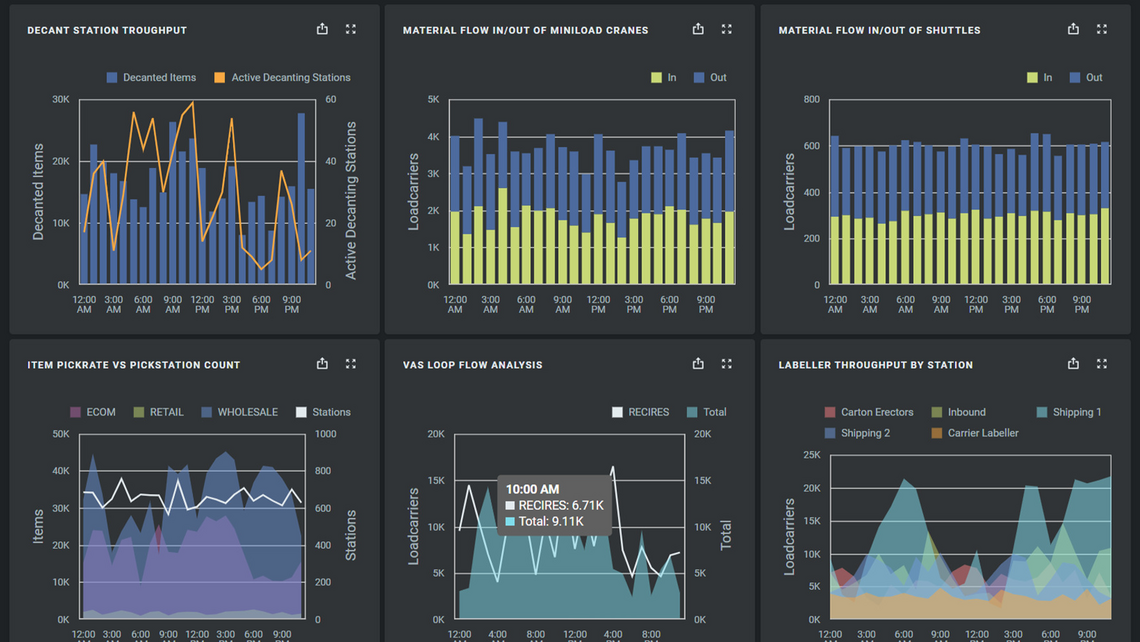
To stay ahead of the curve and the competition doesn’t require a crystal ball that lets you see your warehouse’s future. Still, the demand for real-time, data-driven visibility is increasing across the industries of general logistics, manufacturing, automotive, and e-commerce. Achieving that level of oversight is possible with the use of digital twins, the gold standard in visibility technology in the larger digital transformation movement. While you may have heard of digital twins, misconceptions abound as to what they really are. Rather than a 3D model or a rough simulation, a digital twin is a live, digital replica that reflects every element of a physical warehouse, allowing for continuous monitoring, analysis, and optimization. It communicates with the information center, which is your warehouse management system (WMS), to create a continuously updated, real-time digital environment.
In this article, we’ll explore how this leading logistics software technology differs from simulation and emulation tools. We’ll also get into some practical use cases for digital twins. Finally, we’ll explain how digital twins can revolutionize the decision-making process, providing formerly unprecedented up-to-the-moment clarity.
What a Digital Twin Is in the Logistics Context
The key to a digital twin functionality is a two-way data exchange that guarantees the digital representation of the system or warehouse will always mirror that of the physical assets. Digital twins are used across several industries and have the ability to emulate large, complex systems. The scope of the possible application of digital twins in different environments is so broad that research into the technology has been funded by the U.S. National Science Foundation.
In warehouse logistics, digital twin technology can be leveraged to create a full digital warehouse model. Using a continuous feedback loop, data from the physical system is sent to the model for real-time monitoring. This feedback loop can also send signals back to the physical asset, enabling real-time optimization and straightforward testing. With a digital representation that’s essentially identical to the physical warehouse and in constant communication with it and your logistics software, observation, testing, and decision-making can be performed with greater confidence and richer data. Digital twins are central to comprehensive, smart automation strategies and the latest in advanced warehouse orchestration.
How Digital Twins Differ from Simulation and Emulation Tools
Digital twins differ from the emulation and simulation tools you may already be familiar with. Let’s explore the distinctions:
Each of these tools serves a distinct purpose and can complement one another within a warehouse logistics plan. It’s not a matter of choosing between a digital twin and simulation or emulation tools. They function together to provide a complete picture from the early stages of design to full operation and beyond.
Digital twins are considered the next generation of simulation and emulation tools because they unify live data, automation insights, and operational decision-making. Such oversight is not possible with its predecessors.
![[Translate to North America:] logistics software](/fileadmin/_processed_/9/e/csm_Digital_Twins_Inner_1_8a883db3a6.png)
Why Digital Twins Are Becoming a Core Component of Modern Logistics Software
Incorporated into a warehouse logistics software solution, digital twins expand the capabilities of a standard WMS, WES, or WCS from providing seamless inventory orchestration to giving managers real-time access to system-wide intelligence.
Digital twins enhance existing data-enriched environments by providing warehouse managers with a real-time, holistic view of system performance across decision support tools, IoT-enabled automation, and equipment coordination processes. By continuously mirroring the physical warehouse, a digital twin allows operational and technical leads to evaluate opportunistic algorithms or logic changes, quickly diagnose inefficiencies, predict issues before they escalate, and validate operational decisions with pinpoint accuracy.
“Improved artificial intelligence technology has transformed the relevance and accuracy of digital twins,” the University of San Diego reports. “As digital twin technology continues to mature, it's becoming an essential asset in building agile, intelligent supply chains.”
As part of a larger system, digital twins help optimize everything from inventory flow and equipment utilization to labor allocation and maintenance planning. The demand for digital twins as part of broader modernization roadmaps is growing and will continue to grow as decision-makers assess their value.
Practical Use Cases for Digital Twins in Warehousing and Fulfillment Operations
Let’s look at the tangible benefits of creating a digital twin of your warehouse environment.
Digital twins provide an accurate representation of your facility's current capacity, equipment status, and workflow bottlenecks. This enables timely decisions to avoid preventable problems and tweaks to optimize operations. TGW Logistics controls and automation can be integrated with digital twin technology to enable continuous fine-tuning.
Digital twins use live sensor data to virtually model machine behavior. They can predict failures before they occur, significantly reducing costly downtime in high-volume industries such as automotive and e-commerce.
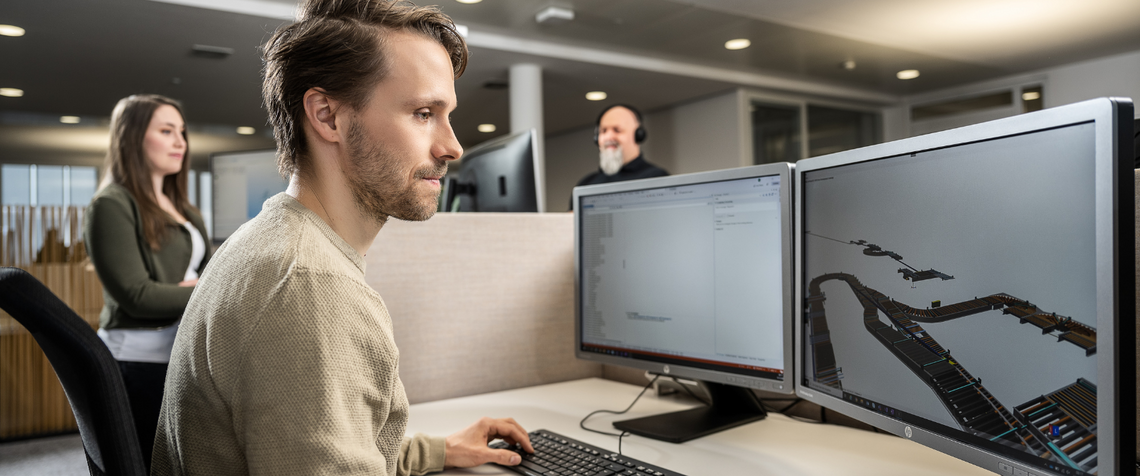
Using a live-synced virtual environment, operational and technical teams can test layout changes, routing logic adjustments, throughput shifts, and labor shifts with clear-sighted, data-informed results, not best guesses. Isolated simulation models are useful but can’t provide the same level of accuracy.
Digital twins are also an effective and efficient training tool, where maintenance training, life cycle accounting, and labor issues can be troubleshooted without disrupting live warehouse activity. They enable staff to build confidence, validate processes, and resolve problems before they impact performance.
As links in smart supply chains, digital twins support multi-site visibility, networking decision-making, and cross-facility optimization. This interconnected view of the supply ecosystem ensures that decisions made at one location improve performance across the entire supply chain.
How TGW Supports Digital Twins Through WERX and Integrated Platforms
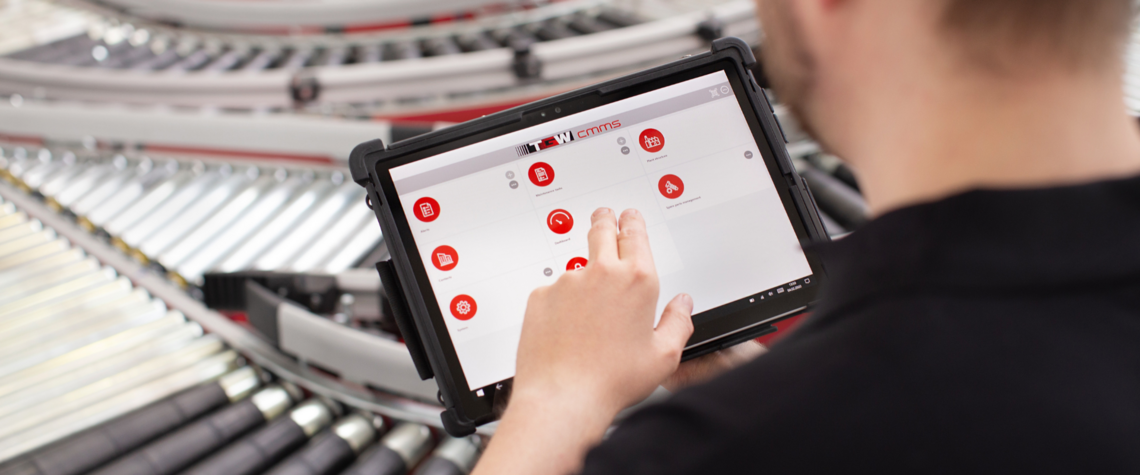
WERX is TGW Logistics’’ warehouse software solution, a comprehensive suite with unmatched support that is as modular and scalable as our physical automation assets.
WERX serves as the operational brain, collecting, synchronizing, and distributing real-time data to digital twin environments. Through the continuous feedback loop, the software and digital twin integration allow for end-to-end modeling, operational visualization, and decision support. This state-of-the-art technology is a natural extension of TGW Logistics’ system architecture and further evidence that we specialize in long-term partnership and future-proofing your facility.
Choosing the Right Approach: When to Use Simulation, Emulation, and Digital Twins
Simulation, emulation, and digital twins each deliver value at different stages of a warehouse modernization journey. Simulation is most effective early on, when teams are validating concepts, testing design options, and forecasting performance outcomes. Emulation becomes essential once the design is set, ensuring that systems function accurately before anything goes live. Digital twins then take over, providing continuous, real-time insight to monitor operations, optimize performance, and support long-term decision-making.
Rather than replacing simulation or emulation, digital twins are another tool in the toolbox. All three tools together give operational and technical leads a complete suite of capabilities from initial planning through ongoing optimization.
Digital Twins as the Next Step in Logistics Software Modernization
A huge leap forward in virtual modeling technology, digital twins offer considerable strategic value to general logistics, manufacturing, automotive, and e-commerce operations, among other industries. These continuously data-informed digital environments build on the predictive benefits of existing simulation and emulation tools. Introducing digital twins to your broader modernization roadmap boosts long-term warehouse resilience and enhances your other smarter automation investments.
Ready to see how a digital twin can fit into your logistics plan? Contact TGW Logistics today to learn more about our full ecosystem for digital transformation and operational optimization.
![[Translate to North America:] warehouse control system](/fileadmin/_processed_/b/8/csm_Emulation_and_Simulation_Blog_Header__edecc59a96.png)