
Optimizing Order Fulfillment: Automated Packaging Solutions for Scalability
In the quest to optimize fulfillment, packaging is often treated as the last step or even an afterthought, yet it’s arguably the most consequential stage. The packaging of an order is the last physical interaction between your warehouse’s operations and the customer experience, which means cost, speed, and sustainability are of the utmost importance. With fulfillment volumes rising and SKU profiles becoming even more diverse, warehouse packaging decisions now have an outsized impact on labor efficiency, transportation spend, and environmental, social, and governance (ESG) performance. That’s why choosing the right warehouse automation approach for the packaging stage is not only a technical upgrade but a strategic decision that requires leaders to weigh distinct operational advantages and tradeoffs against the realities of their network, workforce, and customer expectations.
Video Breakdown
Prefer to listen than read? Watch the video at right to hear Blake Neal of TGW North America explain the key insights from this blog. For more relevant videos, check out our "The Automation Conversation" playlist on YouTube.

Manual Packaging: Flexibility at the Cost of Consistency
Even as other processes are automated, manual packaging remains the norm in low-volume order fulfillment environments, early-stage operations, and businesses with extreme SKU variability. It’s accessible because it depends solely on human labor and basic tools, but operationally, it’s fragile. It’s difficult to scale up as needs expand, and it can be a breeding ground for error.
Operational Advantages of Manual Packaging
That said, manual packaging processes certainly have their advantages. They may make it easier to handle irregular, oversized, or non-standard SKUs that automated systems aren’t prepared to accommodate. Manual packaging also allows for variability. Warehouse teams are empowered to make case-by-case packaging decisions for fragile items, custom inserts, gift-ready packaging, or other specialized circumstances. Perhaps most appealingly, the capital investment required is minimal and well-suited for operations prioritizing their budget.
Operational Trade-offs and Constraints
Manual packaging also presents challenges that may make automation the more efficient choice. Firstly, it relies on human labor, exposing your business to staffing volatility, wage pressure, and overhead training costs. The contributions of individual workers also lead to differential packaging, for example, inconsistent box sizing, excess void fill, and increased shipping air. Additionally, the repetitive movements inherent in manual packaging increase the risk of strain-related injuries, potentially leading to long-term workforce sustainability challenges.
Semi-Automated Packaging Systems: Incremental Gains with Structural Limitations
A compromise between a completely manual packaging process and a fully automated one is a semi-automated system that preserves some of the benefits of both. Semi-automated processes use standalone equipment, such as carton erectors, tapers, and void-fill dispensers, to reduce manual effort without completely redesigning the packaging workflow.
Where Semi-Automation Delivers Value
Introducing new equipment and some automation to a packaging process that still requires human input can benefit your facility in several ways.
- Removing repetitive box-folding and sealing tasks: This improves ergonomics for individual workers (reducing the risk of injury) and reduces fatigue.
- Machine-assisted box assembly: This upgrade increases throughput at individual stations and allows workers to focus on product placement.
- Modular deployment: A modular plan designed with growth in mind enables operations to expand capacity gradually as volumes increase.
Structural Trade-offs of Semi-Automated Approaches
Decision makers should also consider the downsides of not fully committing to automating the packaging stage.
- Workflow fragmentation: Human intervention remains required between machines, possibly creating disconnected process steps
- Inefficiencies with varying SKUs: Fixed box sizing can lead to wasted space, increased dunnage, and higher transportation costs.
- Physical footprint: Equipment can consume valuable floor space without delivering proportional throughput gains.
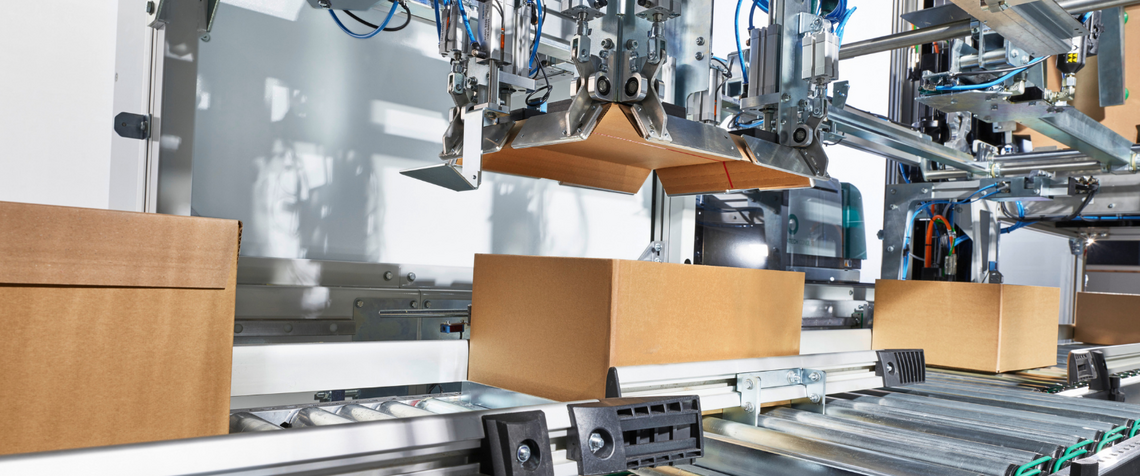
Fully Automated Packaging Systems: Predictability, Throughput, and Volume Efficiency with TGW PackChain
TGW Logistics’ fully automated packaging systems seamlessly integrate with upstream automation and function with little to no human interaction. They are engineered to support and optimize the logistics for ecommerce facilities and other continuous, high-volume fulfillment environments.
Core Operational Benefits of Full Automation
Fully automating the packaging phase of order fulfillment can lead to the following tangible outcomes:
- Predictable throughput: Continuous operation enables consistency across extended shifts and peak demand periods.
- Optimized use of resources: Automated right-sizing significantly reduces box volume, directly lowering shipping and material costs.
- Measurable, repeatable packaging performance: Performance statistics generated by controlled processes support long-term operational planning.
Beyond PackChain, TGW Logistics can integrate other packaging automation technologies for boxes and polybagging.
Strategic Trade-offs to Consider
Opting for full automation may require concessions such as the following, which is why warehouse leaders should weigh their unique needs against their existing realities.
- Initial capital investment requirements: The cost of fully automated packaging stations is higher than that of manual or semi-automated approaches and may not be the most cost-efficient choice for smaller operations.
- Reduced flexibility: Manual packaging processes are generally friendlier to highly irregular or non-standard SKUs that fall outside system tolerances and can’t be accommodated by a limited range of standard box sizes.
- Deployment concerns: Successful implementation depends on upstream process stability and accurate item dimension data.
Right-Sizing Technology and the Elimination of Shipping Air
Right-sizing technology is the process of reshaping boxes to match the exact height of packed goods, rather than forcing items into predefined carton sizes, which can result in damage or an egregious amount of wasted space.
TGW Logistics’ PackChain machines take your orders through the entire right-size process, optimizing the use of materials:
- Assemble: Box creation
- Reduce: Height Adjustment
- Lid: Automatic Sealing
PackChain’s built-in sensors identify the highest point within the carton and automatically adjust the box height before sealing. Minimizing empty space inside order parcels directly lowers dimensional weight charges and reduces transportation inefficiencies.
Logistics and Sustainability Impact
TGW Logistics clients have reaped the measurable benefits of implementing PackChain technology in their facilities. Crucially, automation can reduce box volume by up to 40 percent, allowing more packages per truckload and fewer trucks on the road. Transportation efficiency improvements like this help facilities meet emissions-reduction targets and achieve ESG goals. Additionally, the material savings generated by automated right-sizing reduce corrugate usage and decrease the need for downstream waste handling.
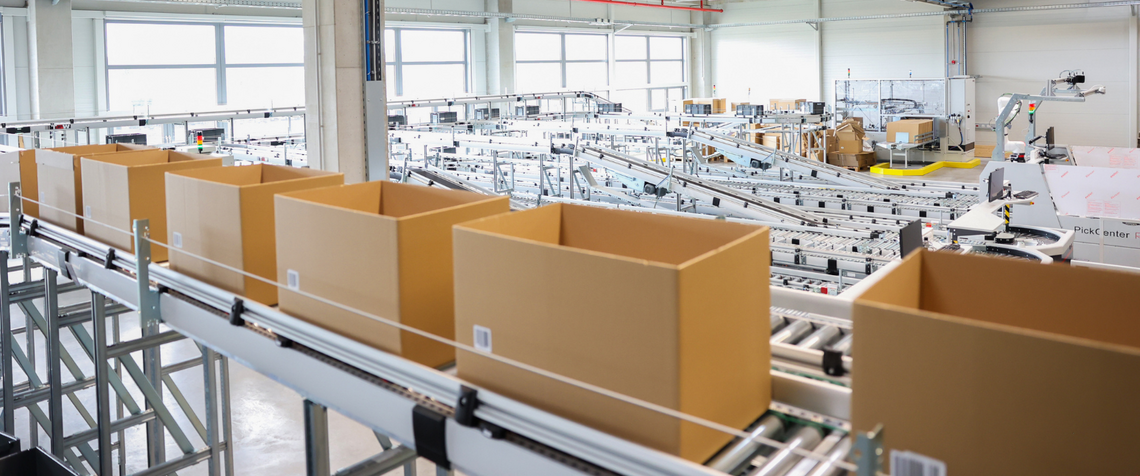
Packaging Technology and Its Impact on Picking Station Workflows
Perhaps surprisingly, your facility’s packaging technology, whether it be semi- or fully automated, has a direct impact on an earlier phase of the process. Though packaging comes after, the process influences how work is performed at picking stations and how many times an item needs to be handled. Labor efficiency, ergonomics, and error rates are all determined by the design of these workflows.
Advanced workflows such as TGW Logistics’ PickCenter One, when combined with a technology like PackChain Assemble, can allow pickers to place items directly into their shipping carton at an ergonomically designed picking station. By negating the need for additional steps in between, this simplified approach eliminates intermediate totes and reduces unnecessary item movement and touches.
With full automation, the warehouse management system triggers the correct carton size to be sent to the picking station, ensuring it arrives in sync with the product. The technology, including sensors, allows the packaging process to adapt dynamically to order composition rather than forcing manual adjustments.
This integration of picking and packaging phases can make a marked difference in labor efficiency and error rate. Automation eliminates the double-touch of moving items from a tote to a shipping parcel, reducing handling time and physical strain on workers. In addition, fewer handoffs of the order reduce the opportunity for picking and packing errors. Order accuracy improves while injuries and fatigue decrease.
Matching Packaging Automation to Order Fulfillment Strategy
There is no magical, one-size-fits-all packaging approach that can optimize every operation. However, we’ve also found that misalignment between technology and workflow creates inefficiencies that compound over time. As you explore whether a manual, semi-automated, or fully automated packaging process is best for your facility’s needs and goals, consider how each will impact labor, throughput, logistics costs, and sustainability, and decide what long-term tradeoffs are acceptable.
Far from an afterthought, packaging automation is a pivotal final step in your order fulfillment process and should be carefully considered alongside every other phase. Making a strategic, long-term investment in packaging automation strengthens that final step and contributes to achieving broader warehouse automation goals. Contact TGW Logistics today to learn more about our packaging solutions.
![[Translate to UK:] pick and pack material handling](/fileadmin/_processed_/c/e/csm_Pick_and_Pack_Fulfillment_Header_e9c355a8b1.png)
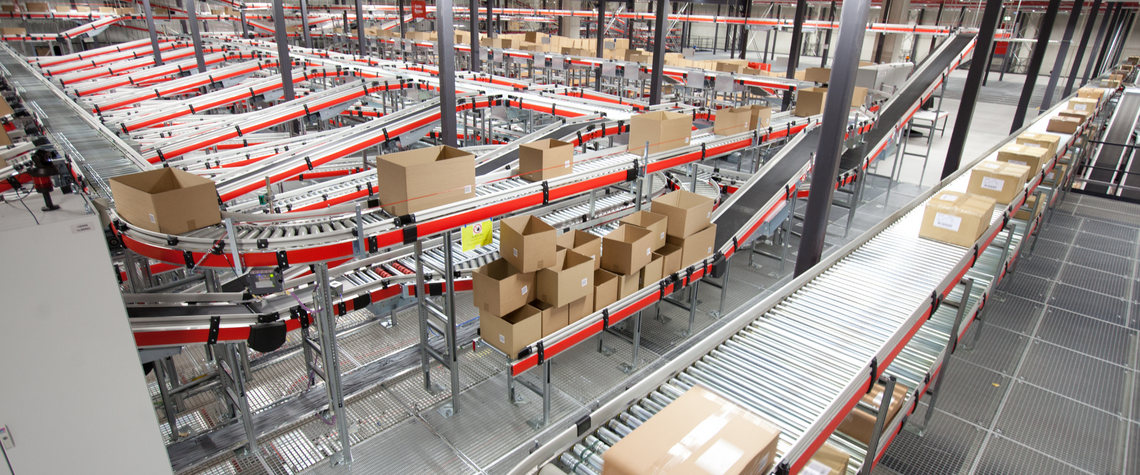

TGW Logistics is a foundation-owned enterprise headquartered in Austria and a global leader in warehouse automation and warehouse logistics. As a trusted systems integrator with more than 50 years of experience, we provide end-to-end services: designing, implementing, and maintaining fulfillment centers powered by mechatronics, robotics, and advanced software solutions.
With over 5,000 employees across Europe, Asia, and North America, we combine expertise, innovation, and a customer-centric dedication to help keep your business growing. With TGW Logistics, it's possible to transform your warehouse logistics into a competitive advantage.