
Mastering Your Supply Chain Strategy: How the Right Approach Shapes Your Distribution Network & Warehouse Automation Choices
Why Supply Chain Strategy Matters More Than Ever
In a market shaped by unpredictable demand, rising customer expectations, labor shortages, and ongoing cost pressure, companies are reevaluating how their distribution networks should evolve. The rapid rise of warehouse automation technologies - from mobile robotics to next-generation shuttle systems - creates a sense of urgency to act fast. But a true competitive advantage does not come from selecting the “right” robot or storage system. It begins much earlier.
It starts with strategy
Your supply chain strategy should provide the blueprint. It shapes how your distribution network is designed - and that network, in turn, determines which intralogistics technologies will deliver resilience, scalability, and cost efficiency. When your business model, growth ambitions, and operational priorities guide these decisions, automation becomes a strategic accelerator rather than a standalone investment.
At TGW Logistics, we support companies across industries in aligning their strategic goals, network design, and warehouse automation roadmap. The result: high-performance intralogistics systems engineered for longterm value, not shortterm fixes.
The Key Decision-Making Criteria That Shape Your Supply Chain Strategy
When evaluating your supply chain strategy and the automation that supports it, these criteria should guide your path. They determine which automation solution - such as shuttle systems or mobile robots - best enable your goals.
- Business Visibility: Short-Term vs Long-Term Outlook
Your ability to forecast demand and understand growth patterns has a direct impact on the right technology choice. A clear view of your business horizon prevents over or underinvesting - and ensures your system can grow with you.
- Financial Logic: CapEx, OpEx, ROI & TCO
A strong supply chain strategy is also a financial framework. Whether your priority is fast ROI, costperunit reduction, risk reduction, or longterm scalability, your financial logic should guide which automation solution makes sense.
- Building Constraints & Real Estate Economics
Brownfield, greenfield, and greyfield environments shape entirely different intralogistics designs. Facility height, footprint, existing infrastructure, and local realestate economics often narrow down automation options before the technical design even begins.
- Inventory Management & SKU complexity
SKU profiles — volume, velocity, attributes, and turnover patterns - define the shape of your distribution network and your automation system. Dense storage? High variability? Fast movers? The right technology must be tailored to your inventory reality.
- Performance Requirements: Speed, Throughput & Service Levels
Your customers’ expectations translate directly into system design parameters. When service levels are non-negotiable, performance-driven technologies rise to the top.
- Workforce Dynamics & Operational Efficiency
Labor availability is becoming one of the biggest supply chain constraints globally. Warehouse automation can reduce dependency, stabilize processes, and unlock consistent performance — essential in tight labor markets.
How These Criteria Shape Your Distribution Network – and Automation
Your network design influences everything: storage density, picking strategy, order consolidation, transportation cost, and ultimately customer experience.
- Centralized distribution networks thrive with high-density, high throughput shuttle systems.
- Decentralized or volatile operations gain agility through mobile robots that can flex with demand.
- Multichannel operations often require sequencing and dynamic buffering - ideal for pocket sorters.
Supply chain strategy, distribution network design, and intralogistics technology are deeply interconnected. When aligned, they create a supply chain that is agile, efficient, and future-ready.
Two Key Technologies Shaping Modern Supply Chains
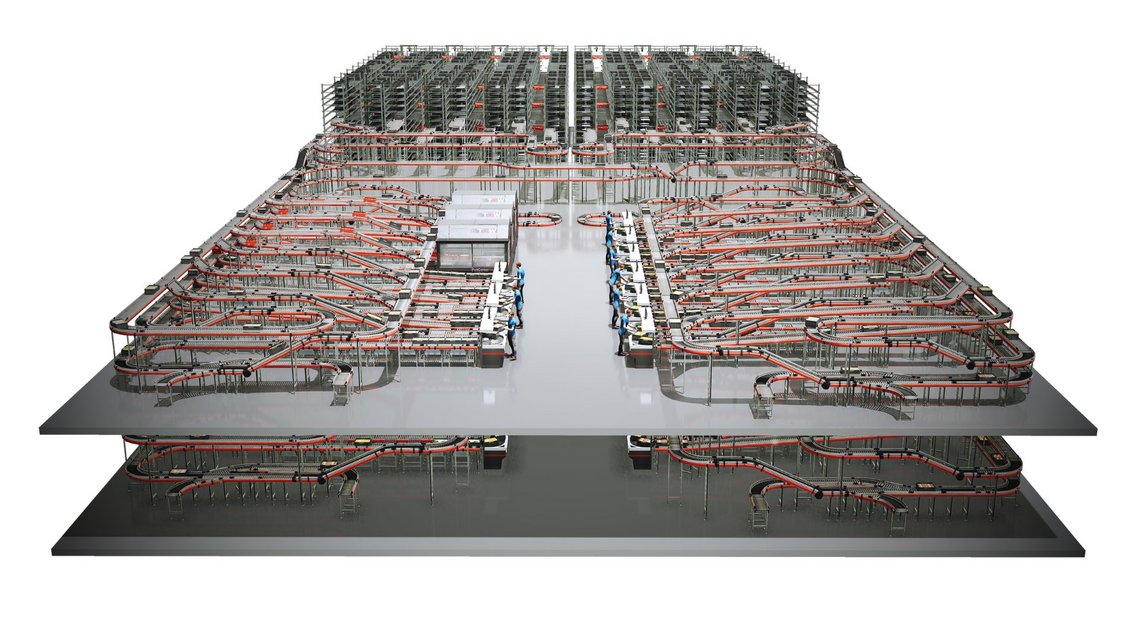
Shuttle Systems
Best for:
- Maximum flexibility across channels
- Highest operator productivity
- High storage density
- Strong uptime requirements
- High throughput
TGW Logistics’ FlashPick solution delivers accuracy, robustness, and performance at scale.
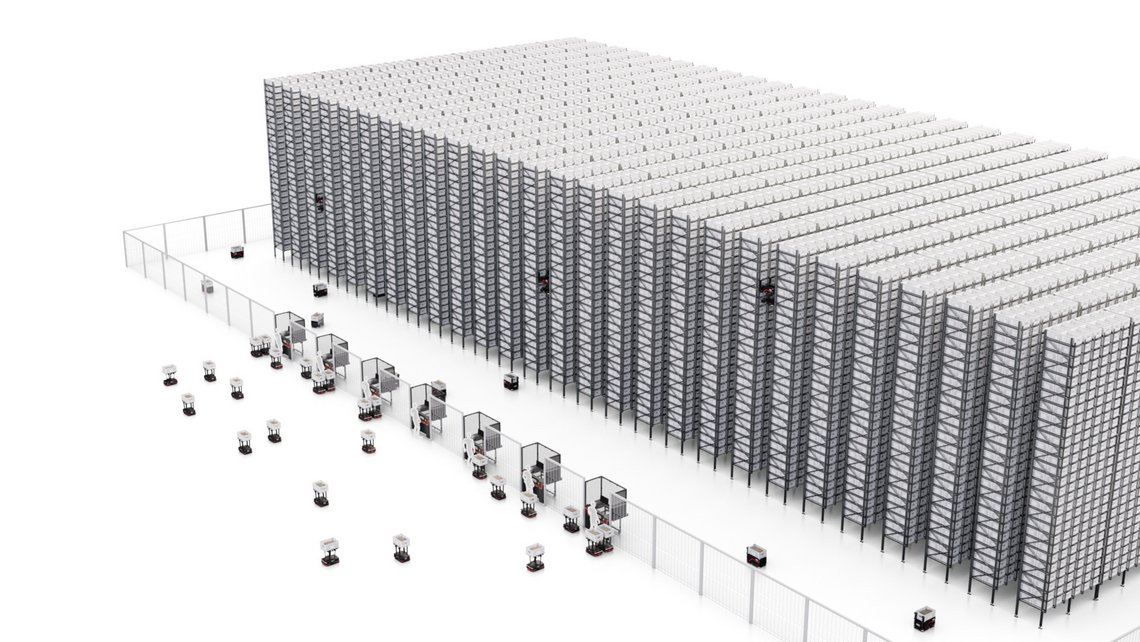
Mobile Robots (AMRs/AGVs)
Best for:
- Flexible, modular growth
- Brownfield environments
- Fast deployment needs
- Seasonal peaks & fluctuating demand
Our LivePick robotic fleets scale easily and adapt to operational changes over time.
Why Strategy Comes Before Automation
A futureproof supply chain doesn’t start with technology - it starts with clarity. Before selecting a shuttle system, deploying mobile robots, or designing a goods-to-person solution, you need a strategic foundation. Your ideal warehouse automation setup depends on where your business is heading, not just where it operates today. Your business model, growth trajectory, customer promise, and operational constraints should guide every decision. When you create your distribution network around strategic priorities, you unlock:
- Optimized inbound & outbound logistics
- Higher order fulfillment accuracy
- Improved storage density
- Reduced labor dependency
- Lower total cost of ownership
- Better customer experience
Whether you operate in fashion logistics, food service, grocery fulfillment industrial distribution, consumer electronics, or healthcare - the right strategy ensures your automation drives measurable impact.
Strategy gives direction. Automation gives power.
Let’s Take Your Supply Chain Strategy to the Next Level
Your ideal automation solution depends on where your business is going — not just where it is today.
Ready to build a futureproof, highperformance supply chain? Let’s discuss your strategy.
Get personalized guidance on designing a distribution network and automation roadmap aligned with your longterm goals.
Contact us!
TGW Logistics is a foundation-owned enterprise headquartered in Austria and a global leader in warehouse automation and warehouse logistics. As a trusted systems integrator with more than 50 years of experience, we provide end-to-end services: designing, implementing, and maintaining fulfillment centers powered by mechatronics, robotics, and advanced software solutions.
With over 4,600 employees across Europe, Asia, and North America, we combine expertise, innovation, and a customer-centric dedication to help keep your business growing. With TGW Logistics, it's possible to transform your warehouse logistics into a competitive advantage.