
Battling the Bottleneck: The Case for a Warehouse Management Software Rollout
Usually, we think of success as a goal, not a problem. But for many growing distribution networks, success is precisely what breaks the system. As order volumes climb and sales channels multiply, cracks start to show in even the most established organizations. This is why we’re seeing a massive shift in retail, e-commerce, fashion, and grocery logistics toward unified warehouse management system (WMS) strategies.
Rather than just a new software solution, it’s an entire system and process designed to cut through the operational noise so the whole network can move as one. A next-gen WMS can serve as a blueprint for the entire enterprise. But how do you actually roll that out without breaking the business? Let’s look at the roadmap.
Video Breakdown
Prefer to listen than read? Watch the video at right to hear Rebecca Call, Head of Process and Software Consulting & Systems Integration Management for TGW North America, explain the key insights from this blog. For more relevant videos, check out our "The Automation Conversation" playlist on YouTube.

Redefining the Full-Network Deployment
In the past, a WMS project was a one-and-done affair. You stood up a facility, mapped the processes, trained the crew, and stabilized the tech before moving on. It was contained. A full-network deployment is a different animal, because you aren’t just fixing one distribution center (DC). Instead, you’re building a shared nervous system rooted in warehouse management software. This means processes have to be standardized, data has to synchronize across borders, and logic has to work the same way whether it’s a massive flagship hub or a small regional node. We’re seeing a significant trend. COOs and VPs are moving away from patchwork upgrades toward a coordinated approach to kill off complexity once and for all.
Why Warehouse Management Software is Your Scalability Engine
Minor, local upgrades can help a specific team, but they don't fix a fragmented network. In a multi-site world, your WMS is the source of truth. When you roll out a unified system, you improve forecasting, gain visibility across every site, and build the resilience needed to survive peak season. It’s the difference between playing whack-a-mole with vendor errors and actually having data you can bet your business on. So what does that look like?
Phase 1: Strategy and the Rules of Engagement
Before you start a multi-site rollout, you need a governance model. This involves:
- Choosing the right warehouse management software.
- Getting the C-suite united on what success looks like.
- Assigning clear owners for the budget, the timeline, and the risks.
- Prioritizing sites based on their complexity, labor needs, and SKU profiles.
The trick is finding the balance between corporate standards and local reality. Standardization is the north star, but you have to know when a site needs a specific tweak and when it doesn’t.
Phase 2: Architecting the Integration Blueprint
Think of your logistics tech stack as the connective tissue. Between ERPs, OMS, and TMS, the "alphabet soup" of software can get messy. A scalable blueprint fixes this by using:
- Standard API templates that work everywhere.
- Clear rules for cloud vs. on-premise hosting.
- Interface structures that don't break every time you update the software.
- Architected software that allows for flexibility as your business changes.
At TGW Logistics, we often see companies struggling with five different versions of the same WMS. A unified architecture built on solid warehouse management software deletes that technical debt.
Phase 3: The Data Clean-Up
Data friction is the #1 reason implementations fail. If your data is messy, your rollout will be, too. Before you flip a switch, you need:
- Harmonized master data for every item.
- Verified inventory counts.
- Mapped workflows from legacy systems into the new logic.
Yes, clean data powers the system, but it also reduces the risk of a day-one disaster.
Phase 4: Standardizing While Staying Flexible
No two distribution centers are identical. A high-velocity fashion site doesn't operate like a grocery warehouse full of perishables. That’s why your WMS has to be both rigid and flexible. You want consistent reporting and KPIs, but you need to account for differences in existing processes and touchpoints and building sizes. We’ve found that the best way to do this is through onsite discovery. Get on the floor to see how the work gets done before trying to automate it.

Phase 5: The Pilot and the Phased Approach
Never start with a big bang.
Before you touch a live site, model the pilot in software: run peak-day volumes, ugly order profiles, and “what happens if this conveyor goes down” scenarios. Simulation tells you whether the design holds up on paper, and where bottlenecks will show up first. Emulation goes a step further by testing controls, logic, and integrations against a realistic digital twin, so you can validate behaviors, exception handling, and performance without burning production time.
We recommend starting with a pilot, like a single picking station or a facility with moderate complexity. Use it as a laboratory to break things and fix them. Once that model is bulletproof, you move to the high-volume sites where throughput is king. The outlier sites with weird requirements should always come last. By then, your core system will be stable enough to handle exceptions.
Treat the pilot as the proving ground for both the physical process and the digital one. Use simulation to refine slotting, labor assumptions, and throughput targets, then use emulation to harden the WMS/WCS handoffs, alarm logic, and recovery steps. The goal is simple: fewer surprises at go-live, faster stabilization, and a phased rollout that stays predictable even when the real world gets messy.
Phase 6: Managing the Human Element
Many operators have spent a decade learning the quirks of an old system. When you replace it, you’re asking them to change their daily lives. So while the warehouse management software itself doesn’t fail, the implementation might if people aren't brought along for the ride. A people-first change management rollout includes:
- Role-based training: Don't teach them the whole system; instead, involve them in discovery to get them on the floor.
- Super-users: Peers who can answer questions on the fly.
- Operational readiness: Letting teams practice in the system before the live orders start flowing.
Phase 7: The "Ready" Check and Go-Live
The final stretch is all about discipline. Multi-site go-lives require massive coordination among automation engineers, IT, and ops leaders. Every site needs a complete validation cycle:
- UAT (User Acceptance Testing): Can the workers actually do their jobs?
- Cutover planning: Exactly how do we turn off the old and turn on the new?
- Hypercare: Intensive support for the first few weeks to fix the glitches.
The Big Picture: Continuous Improvement
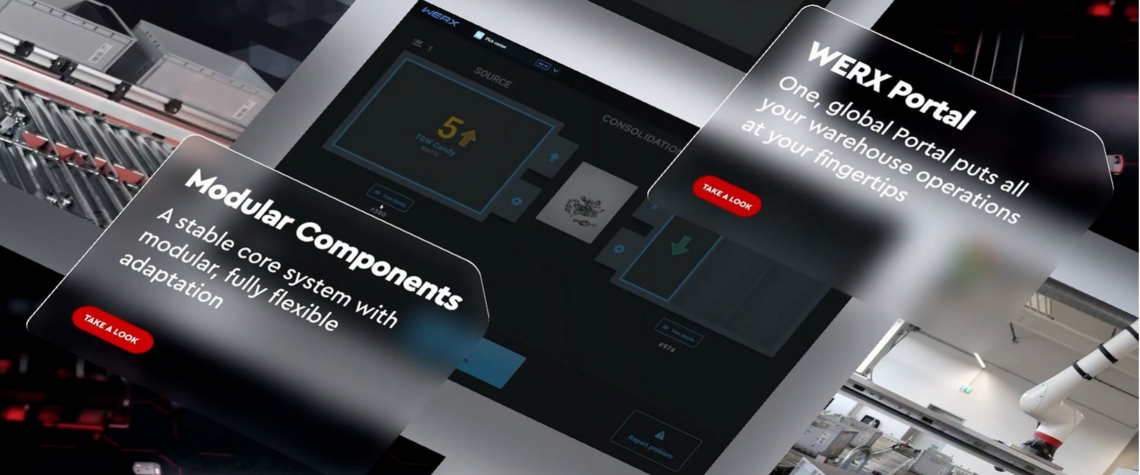
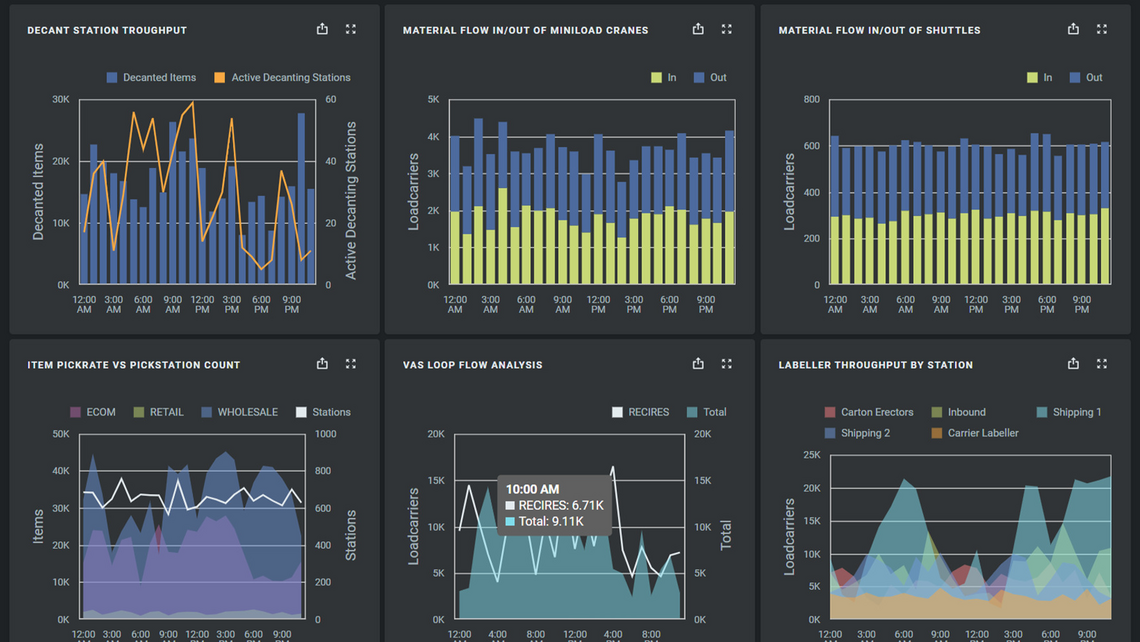
Once the whole network is live, you’ve unlocked the holy grail of logistics with network-wide KPIs, cross-site benchmarking, and the ability to route labor and inventory dynamically. This is precisely why we built WERX. Our warehouse management software is designed for this specific journey, giving you centralized visibility across every site and still keeping the granular control you need on the floor.
If you’re ready to move past the whack-a-mole phase of logistics and build a unified distribution network, TGW Logistics has the roadmap and the tech to get you there. Let’s talk about how to start your rollout.
Redefining the Full-Network Deployment
In the past, a WMS project was a one-and-done affair. You stood up a facility, mapped the processes, trained the crew, and stabilized the tech before moving on. It was contained. A full-network deployment is a different animal, because you aren’t just fixing one distribution center (DC). Instead, you’re building a shared nervous system rooted in warehouse management software. This means processes have to be standardized, data has to synchronize across borders, and logic has to work the same way whether it’s a massive flagship hub or a small regional node. We’re seeing a significant trend. COOs and VPs are moving away from patchwork upgrades toward a coordinated approach to kill off complexity once and for all.
Why Warehouse Management Software is Your Scalability Engine
Minor, local upgrades can help a specific team, but they don't fix a fragmented network. In a multi-site world, your WMS is the source of truth. When you roll out a unified system, you improve forecasting, gain visibility across every site, and build the resilience needed to survive peak season. It’s the difference between playing whack-a-mole with vendor errors and actually having data you can bet your business on. So what does that look like?
Phase 1: Strategy and the Rules of Engagement
Before you start a multi-site rollout, you need a governance model. This involves:
- Choosing the right warehouse management software.
- Getting the C-suite united on what success looks like.
- Assigning clear owners for the budget, the timeline, and the risks.
- Prioritizing sites based on their complexity, labor needs, and SKU profiles.
The trick is finding the balance between corporate standards and local reality. Standardization is the north star, but you have to know when a site needs a specific tweak and when it doesn’t.
Phase 2: Architecting the Integration Blueprint
Think of your logistics tech stack as the connective tissue. Between ERPs, OMS, and TMS, the "alphabet soup" of software can get messy. A scalable blueprint fixes this by using:
- Standard API templates that work everywhere.
- Clear rules for cloud vs. on-premise hosting.
- Interface structures that don't break every time you update the software.
- Architected software that allows for flexibility as your business changes.
At TGW Logistics, we often see companies struggling with five different versions of the same WMS. A unified architecture built on solid warehouse management software deletes that technical debt.
Phase 3: The Data Clean-Up
Data friction is the #1 reason implementations fail. If your data is messy, your rollout will be, too. Before you flip a switch, you need:
- Harmonized master data for every item.
- Verified inventory counts.
- Mapped workflows from legacy systems into the new logic.
Yes, clean data powers the system, but it also reduces the risk of a day-one disaster.
Phase 4: Standardizing While Staying Flexible
No two distribution centers are identical. A high-velocity fashion site doesn't operate like a grocery warehouse full of perishables. That’s why your WMS has to be both rigid and flexible. You want consistent reporting and KPIs, but you need to account for differences in existing processes and touchpoints and building sizes. We’ve found that the best way to do this is through onsite discovery. Get on the floor to see how the work gets done before trying to automate it.
Phase 5: The Pilot and the Phased Approach
Never start with a big bang.
Before you touch a live site, model the pilot in software: run peak-day volumes, ugly order profiles, and “what happens if this conveyor goes down” scenarios. Simulation tells you whether the design holds up on paper, and where bottlenecks will show up first. Emulation goes a step further by testing controls, logic, and integrations against a realistic digital twin, so you can validate behaviors, exception handling, and performance without burning production time.
We recommend starting with a pilot, like a single picking station or a facility with moderate complexity. Use it as a laboratory to break things and fix them. Once that model is bulletproof, you move to the high-volume sites where throughput is king. The outlier sites with weird requirements should always come last. By then, your core system will be stable enough to handle exceptions.
Treat the pilot as the proving ground for both the physical process and the digital one. Use simulation to refine slotting, labor assumptions, and throughput targets, then use emulation to harden the WMS/WCS handoffs, alarm logic, and recovery steps. The goal is simple: fewer surprises at go-live, faster stabilization, and a phased rollout that stays predictable even when the real world gets messy.
Phase 6: Managing the Human Element
Many operators have spent a decade learning the quirks of an old system. When you replace it, you’re asking them to change their daily lives. So while the warehouse management software itself doesn’t fail, the implementation might if people aren't brought along for the ride. A people-first change management rollout includes:
- Role-based training: Don't teach them the whole system; instead, involve them in discovery to get them on the floor.
- Super-users: Peers who can answer questions on the fly.
- Operational readiness: Letting teams practice in the system before the live orders start flowing.
Phase 7: The "Ready" Check and Go-Live
The final stretch is all about discipline. Multi-site go-lives require massive coordination among automation engineers, IT, and ops leaders. Every site needs a complete validation cycle:
- UAT (User Acceptance Testing): Can the workers actually do their jobs?
- Cutover planning: Exactly how do we turn off the old and turn on the new?
- Hypercare: Intensive support for the first few weeks to fix the glitches.
The Big Picture: Continuous Improvement
Once the whole network is live, you’ve unlocked the holy grail of logistics with network-wide KPIs, cross-site benchmarking, and the ability to route labor and inventory dynamically. This is precisely why we built WERX. Our warehouse management software is designed for this specific journey, giving you centralized visibility across every site and still keeping the granular control you need on the floor.
If you’re ready to move past the whack-a-mole phase of logistics and build a unified distribution network, TGW Logistics has the roadmap and the tech to get you there. Let’s talk about how to start your rollout.

TGW Logistics is a foundation-owned enterprise headquartered in Austria and a global leader in warehouse automation and warehouse logistics. As a trusted systems integrator with more than 50 years of experience, we provide end-to-end services: designing, implementing, and maintaining fulfillment centers powered by mechatronics, robotics, and advanced software solutions.
With over 5,000 employees across Europe, Asia, and North America, we combine expertise, innovation, and a customer-centric dedication to help keep your business growing. With TGW Logistics, it's possible to transform your warehouse logistics into a competitive advantage.