
Skip to main navigation Skip to main content Skip to page footer
Do you have questions about our products and services?
Our team will be happy to help you. You can reach us at
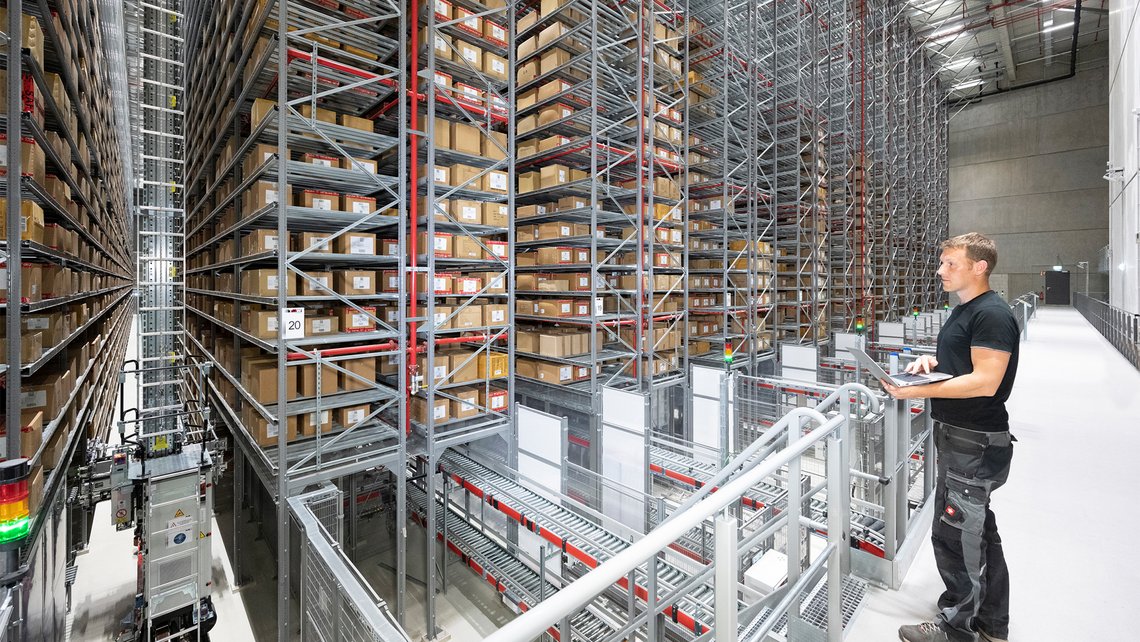
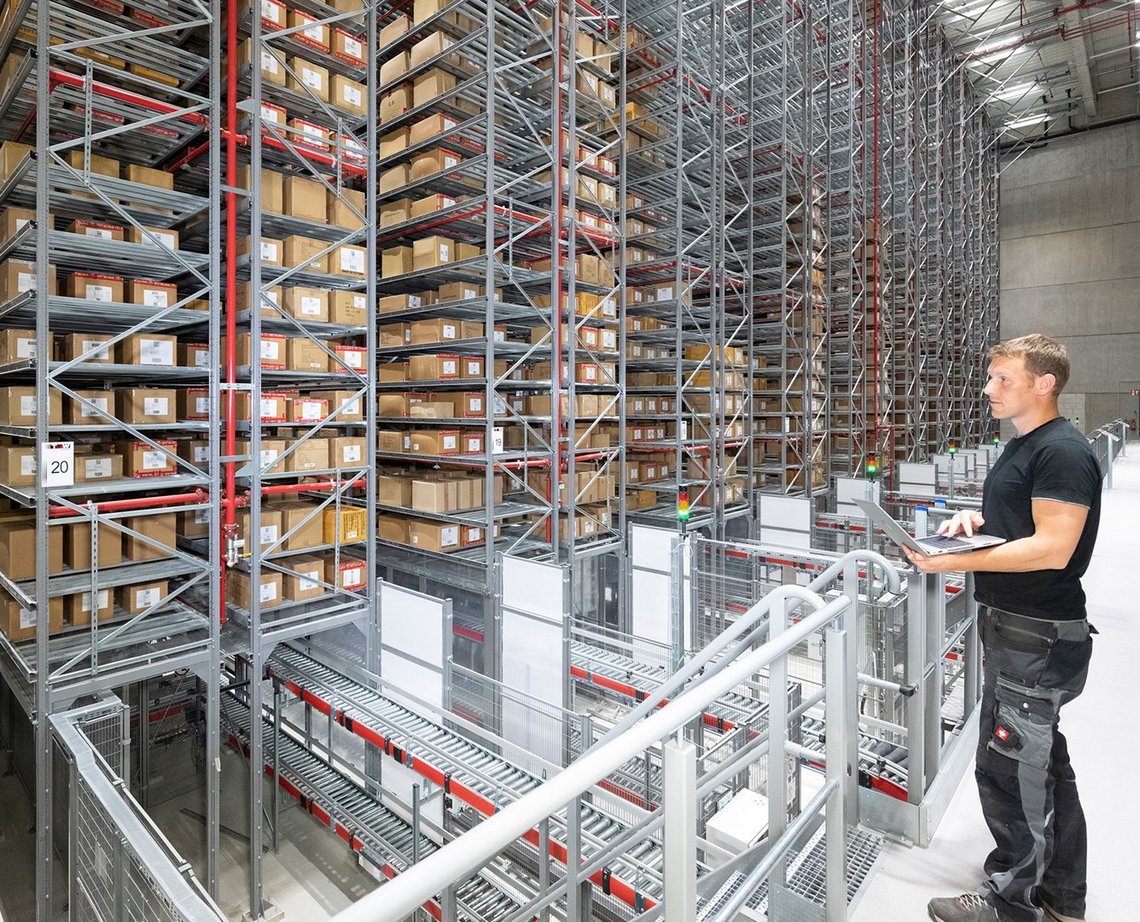
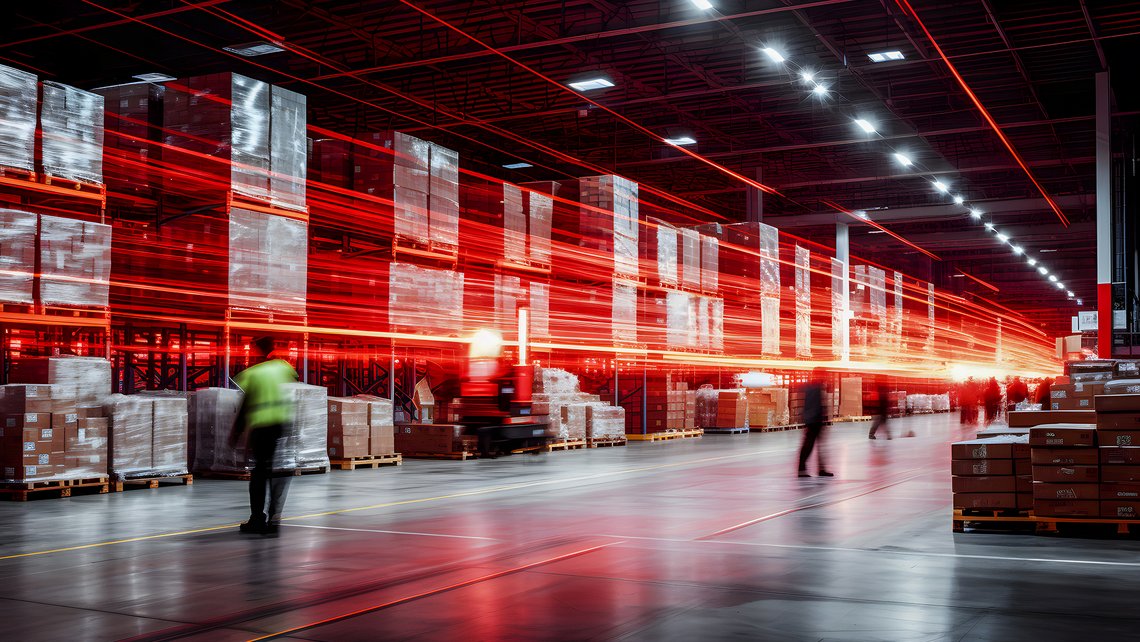
A futuristic warehouse look with red lasers shining through the warehouse A futuristic warehouse look with red lasers shining through the warehouse

Your warehouse is already automated, but is it ready for the next five years?

Over the past decade, many companies have made significant investments in logistics automation: warehouse management systems (WMS), conveyors, sorters, automated picking solutions or robotics. 

Many of those decisions were right for their moment. The challenge now is adapting those automations to a reality that has changed profoundly. The business model has changed and will continue to do so. 

The real goal, beyond automating, is ensuring that automation remains valid as the business evolves, without having to rebuild it from scratch.

The warehouse of the future is not always built from zero. In most cases, it evolves strategically, gradually and continuously.
Automation is no longer enough

For years, logistics were designed around a clear premise: understanding the business, defining a relatively stable order structure and building an optimized solution for that specific scenario. It was a logical and efficient approach.

Many companies made the right decisions at that time, designing highly optimized solutions for their business model back then.

However, in sectors such as fashion, retail, consumer electronics or pharma, the business has changed completely. Customers used to buy mainly in-store; today they order from home. There used to be four seasonal campaigns; now there are ten or twelve. Stores used to receive goods twice a week; now they may receive them daily or even several times a day. Orders are smaller, more frequent and more unpredictable.

Total volume does not always grow at the same pace, but complexity certainly does. And many logistics facilities are still dimensioned to move large batches, not to prepare thousands of small orders with highly variable rhythms.

On top of this comes an increasingly critical factor: the lack of labor. In large logistics centers, it is common for 15% to 20% of operators not to show up each morning, not counting planned absences. This human variability puts enormous pressure on systems that were never designed to absorb it.

The risk of the “static automated warehouse”

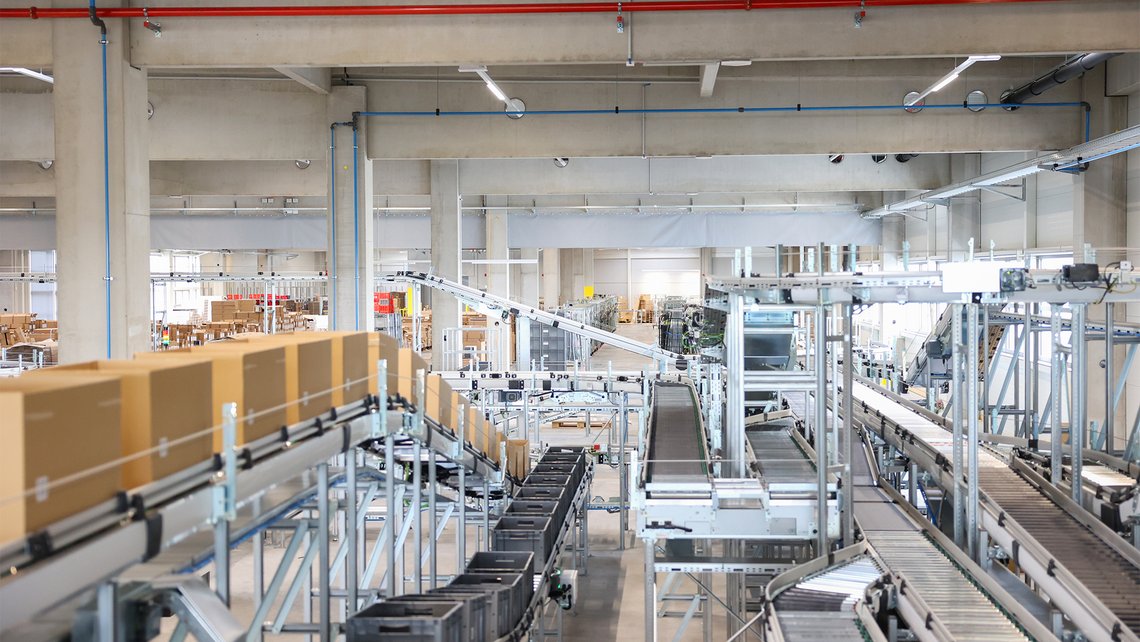
Many current automation systems are perfectly designed. They are robust, reliable and highly efficient within the parameters for which they were conceived, but extremely rigid.

When flows, order mix or channels change, problems arise: legacy integrations that are difficult to modify, high costs every time a process needs adjustment and excessive dependence on very specific solutions. Without a future-oriented approach, automation can end up limiting adaptability.

In these cases, logistics stop being a business enabler and start conditioning it. The warehouse no longer supports the commercial strategy: it forces the business to adapt to its limitations. That is when many companies discover that their largest logistics investment has become a bottleneck.

What will change in the next five years

Talking about the future of logistics is not a theoretical exercise, because the changes that will define the next five years are already happening.

Consumers are more demanding, e‑commerce has shifted from being an additional channel to becoming the main one in many sectors, and logistics have become a key differentiator for brands. Even sectors that traditionally operated with very stable flows are seeing their distribution models transform completely.

A clear example is manufacturers and distributors that used to ship large volumes to a single destination and now must prepare small, highly varied shipments for multiple locations. The result is enormous pressure on systems never designed for that level of fragmentation.

In this context, several key trends are consolidating:

  • Growth of omnichannel operations and micro‑fulfillment, with much more fragmented, customer‑proximate processes.

  • Increasing collaboration between people and robots, especially mobile robotics, which brings flexibility to changing scenarios. 

  • Automation increasingly driven by software, where system intelligence and flow orchestration matter as much as hardware. 

  • Need for real‑time end‑to‑end visibility, with full traceability and actual use of operational data. 

  • Greater pressure on energy efficiency and sustainability, driven by costs, regulation and market expectations.

Signs that your warehouse is not ready for the future

There are clear signs that automation is no longer aligned with the business. One of the most obvious is when any operational change becomes a complex, lengthy and costly project. If scaling capacity requires downtime, risks or temporary service degradation, the system is not ready to grow.

Another common symptom is that data exists but is not used effectively for decision‑making. Information is available, but it does not translate into real improvements. In many organizations, a strong divide still exists between IT and operations, making joint evolution difficult.

When automation limits business flexibility instead of expanding it, the problem is no longer technological: it is strategic.

Evolving without interruption: a new approach

The current approach to warehouse evolution focuses on building upon what already exists, integrating new capabilities progressively. This means combining traditional, more rigid but highly robust systems with more flexible technologies such as mobile robotics. It also requires modular architectures capable of growing in layers and adapting to the pace of the business.

The key is evolving step by step, in parallel with the customer’s growth, without interrupting operations. In some cases, it may be necessary to temporarily rely on external warehouses or logistics providers, but always with a clear objective: ensuring that the logistics solution supports the business rather than slowing it down.

The importance of the partner, even after automating

In logistics automation, technology matters, but it is not the whole story. What truly makes the difference is having a partner who not only designs and implements but also supports the system over time.

As business evolves, solutions must evolve with it. That is why it is essential to have a partner who understands the operation, knows the sector and has real experience adapting automated facilities to new needs.

The ideal partner provides stability, speaks the same language and is close by, with local teams capable of identifying improvement opportunities, designing retrofit plans and executing expansions without compromising operations.

Automation should not be seen as a one-off project, but as a living platform that evolves alongside the business. Only then can it continue to deliver value over time.

TGW Logistics is a foundation-owned enterprise headquartered in Austria and a global leader in warehouse automation and warehouse logistics. As a trusted systems integrator with more than 50 years of experience, we provide end-to-end services: designing, implementing, and maintaining fulfillment centers powered by mechatronics, robotics, and advanced software solutions.

With over 4,600 employees across Europe, Asia, and North America, we combine expertise, innovation, and a customer-centric dedication to help keep your business growing. With TGW Logistics, it's possible to transform your warehouse logistics into a competitive advantage.