
Lineage x TGW Logistics: Building the Next Generation of Cold Chain Logistics Through Partnership
Smart Automation and Stronger Partnerships
Modern cold chain logistics is no longer defined by storage capacity alone.
Growing product variety, unpredictable demand peaks, labor shortages, and increasing expectations for reliability are fundamentally changing how refrigerated warehouses need to operate. Meeting these challenges requires more than automation. It requires solutions designed to adapt—and partners who can help businesses evolve over the long term.
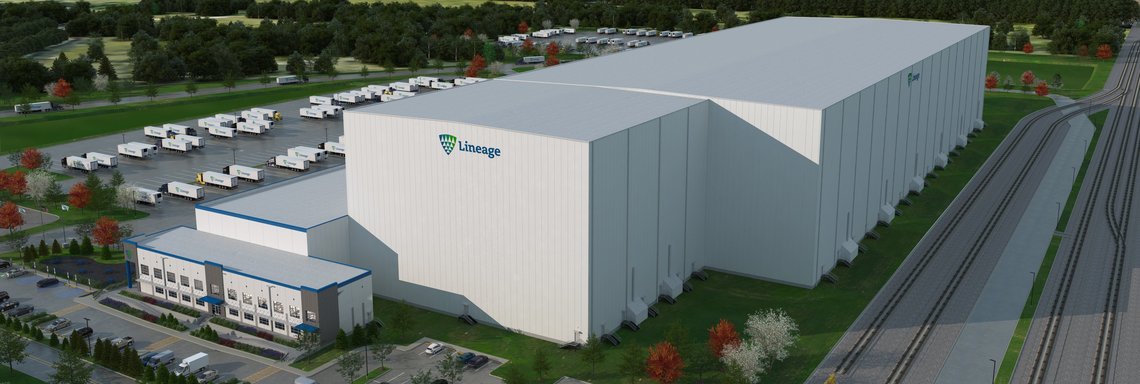
The automated refrigerated warehouse in Hazleton, Pennsylvania, developed together with Lineage, illustrates what this looks like in practice. See the project in action and learn how automation enables scalable, resilient cold chain solutions.
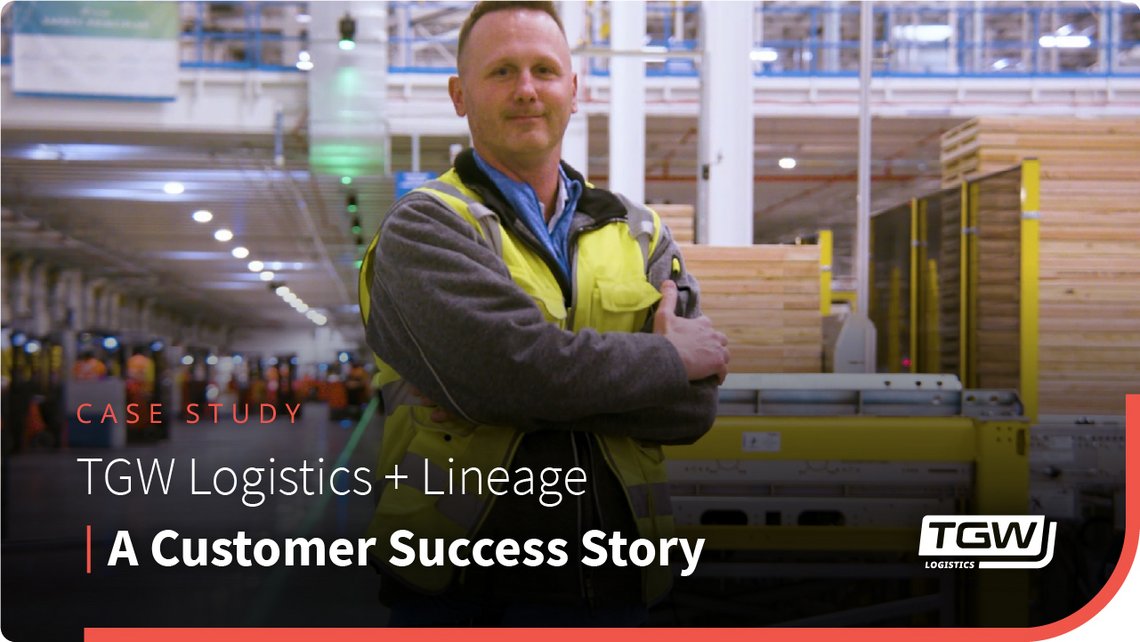
Click on the image to watch the full video:
When Resilience Becomes a Design Principle
Cold storage facilities operate under some of the most demanding conditions in logistics. At temperatures as low as -0.4°F, warehouse operations must remain reliable every hour of every day while supporting increasingly complex product flows.
At the same time, consumer expectations continue to rise. More SKUs, greater product variety, and fluctuating demand require logistics systems that can respond with both speed and flexibility. Warehouse automation provides the foundation—but resilience comes from how the entire system is designed. In Hazleton, every element of the automated warehouse was planned to ensure continuous operations, efficient material flow, and the flexibility to respond to changing market requirements.
Creating Better Environments for People
Warehouse automation is often associated with efficiency. But its impact on people can be just as significant. Instead of spending entire shifts working in freezing temperatures or performing physically demanding tasks, employees can focus on monitoring, operating, and optimizing warehouse processes in significantly improved working conditions. As a result, the facility operates at high performance while creating a safer and more attractive workplace.
Today, Hazleton stores approximately 84,000 pallets, ships around 200 trucks every day, operates 24/7—and does so without requiring employees to work inside the freezer.
Reliability Starts with the Right Architecture
Warehouse performance depends on thousands of interconnected processes. From inbound receiving and storage to picking and shipping, every movement must happen reliably. Conveyor technology therefore becomes much more than material handling transport—it forms the operational backbone that connects every process across the warehouse. For Hazleton, reliability was designed into the system from the very beginning. Pre-configured and pre-tested conveyor modules helped shorten implementation, while a highly available conveyor architecture supports continuous operation—even when individual components require maintenance.
This approach helps minimize downtime, maintain productivity, and ensure reliable operations in one of the most demanding logistics environments. Rather than focusing on individual technologies, the project demonstrates the value of designing an entire logistics ecosystem around availability, flexibility, and long-term performance.
Partnership Beyond Implementation
Successful automation projects are measured long after commissioning. Training, technical expertise, continuous optimization and rapid support all influence how much value an automated warehouse delivers throughout its lifetime.
For Lineage and TGW Logistics, the success of Hazleton is built on more than technology. It is built on collaboration, trust, and a shared commitment to solving challenges together.
"When there comes a project, everybody knows what is to do, when there's a problem, it's not Lineage's problem, it's not TGW's problem, it's our problem, how we can solve this project to make a real success, and at the end, how it should work at the end."
This mindset defines a true partnership: working together from engineering and implementation through operation, optimization and long-term support. As Lineage highlights:
"I would say that TGW has delivered a partnership, number one."
The collaboration continues beyond project completion. With technical support, training, and long-term service capabilities, TGW Logistics supports Lineage in maintaining reliable operations throughout the lifecycle of the system.
"From the beginning, we had techs on site for training our technicians, we have a hotline that we're able to reach out to TGW 24 hours a day if needed, so that has been a huge win for us and then for our team members."
Looking Ahead
As cold chain networks continue to grow in complexity, businesses need more than highly automated facilities. They need automation systems designed for resilience, flexibility, and continuous evolution. Most importantly, they need partners capable of supporting that journey over decades—not just through implementation, but throughout the entire lifecycle.
The Hazleton project demonstrates that the future of cold chain logistics is not built by technology alone. It is built through strong partnerships that combine engineering expertise, operational excellence, and a shared commitment to long-term success.