

![[Translate to North America:] logistics support](/fileadmin/_processed_/9/7/csm_Effective_Onsite_Maintenance_Team_Header_af7aa7536b.png)
Dedicated Logistics Support Through Onsite Teams is Critical for Uptime and Operational Resilience
Maintaining efficiency is a key to success in the fast-paced world of logistics. There is an increased expectation for timely deliveries and operating during peak demand. Any downtime can quickly lead to missed deadlines and unhappy customers. Minimizing downtime with dedicated logistics support through onsite maintenance teams can be a game-changer.
A skilled team on the ground provides rapid troubleshooting and minimizes the risk of equipment failures or missed order deadlines, which stall operations. Having a structured maintenance strategy can help reduce unexpected equipment failures by up to 40%, directly impacting order fulfillment and reliability, boosting throughput, and reducing the strain of peak times. Proactive, preventive maintenance prevents costly interruptions and enhances the reliability of your processes.
Building and maintaining strong onsite maintenance services is an essential component of logistics planning and operational resilience. It can help your organization maintain uptime, optimize workflow, and consistently meet customer expectations.
Defining the Right Skill Sets for Strong Logistics Support
Building a high-performing on-site maintenance team begins with clearly defining the skill sets needed to support both proactive and reactive equipment care. While all team members function as technicians specializing in different aspects of the automation, each role contributes uniquely to system uptime, performance, and long-term reliability.
The Site Engineering Manager leads the on-site team and manages maintenance activities to align with operational goals. This role oversees workload planning, shift scheduling, performance metrics, and team development. The manager also coordinates training, safety compliance, and communication with site operations to confirm maintenance priorities are supporting throughput targets and daily logistics demands.
Automation Technicians focus on the mechanical and mechatronic elements of the system. Their responsibilities include performing repairs, routine inspections, and preventive maintenance on automated hardware. Their hands-on expertise minimizes unplanned downtime and leads to smooth, reliable equipment operation.
Software and Controls Technicians maintain the system’s digital and control components. They troubleshoot and repair sensors, network devices, and communication interfaces, as well as apply patches, software updates, and configuration adjustments. By monitoring system behavior and identifying irregularities early, they help prevent issues that could escalate into operational disruptions.
When technicians understand multiple system layers like mechanical, controls, or software, they can respond quicker to emerging issues and support colleagues during high-demand periods. This versatility strengthens team resilience and helps maintain consistent service levels, even during unexpected challenges.
![[Translate to North America:] logistics support](/fileadmin/_processed_/8/1/csm_Effective_Onsite_Maintenance_Team_Inner_1_c46fba5685.png)
Structuring the Team to Provide Reliable Coverage Without Burnout
Maintaining continuous support without overworking staff is crucial for any logistics operation that provides reliable coverage. Balancing operational efficiency with employee well-being helps make sure that staff are not only productive but also adequately rested and supported, which can be a challenge. Key factors in sustaining long-term performance include proper scheduling, effective team structures, and the integration of technology.
Well-planned schedules are crucial for effective, continuous coverage. Regularly reviewing workload patterns allows managers to balance staffing needs with operational demand so that no one is overburdened during peak periods. Additionally, thoughtful scheduling can help accommodate personal preferences, promoting a healthier work-life balance for employees. Having a proactive approach not only enhances team productivity but also helps reduce turnover and supports a more stable workforce over time.
Example:
Site A runs 24/7, only stopping equipment if something breaks. Scheduled maintenance is kept to a minimum to maximize machine operation. Maintenance coverage is needed at all times.
Site B runs Monday-Friday, 9 a.m. to 6 p.m. Maintenance coverage is only needed during office hours, and proactive maintenance can be done nearly any evening or weekend.
Backup staffing strategies are equally crucial for maintaining consistent service levels. Unexpected absences, emergencies, or seasonal spikes in activity can quickly strain available resources. In many cases, you may also need to temporarily increase staffing levels in preparation for peak season to prevent interruption. Partnering with local contractors or service providers for temporary coverage offers a cost-effective way to maintain service quality without overextending your core team.
In addition to supplemental staffing, our Field Services provide the comprehensive support needed to keep your operation performing at its best. From reliable coverage during peak periods to proactive maintenance and optimization, we deliver unmatched logistics maintenance that strengthens performance at every stage. You receive the right expertise exactly when you need it, leading to maximum efficiency and consistent uptime.
Another approach is the regional hub model, where a centralized maintenance group supports multiple facilities within a given area. This setup provides access to specialized support and equipment while maintaining flexibility. On the other hand, facility-specific teams offer a deeper familiarity with site-specific systems and processes, which is an advantage in complex or high-throughput environments.
By structuring shifts, creating backup strategies, and strategically staffing models, organizations can deliver reliable logistics support without burnout or loss of efficiency.
Recommended Watch
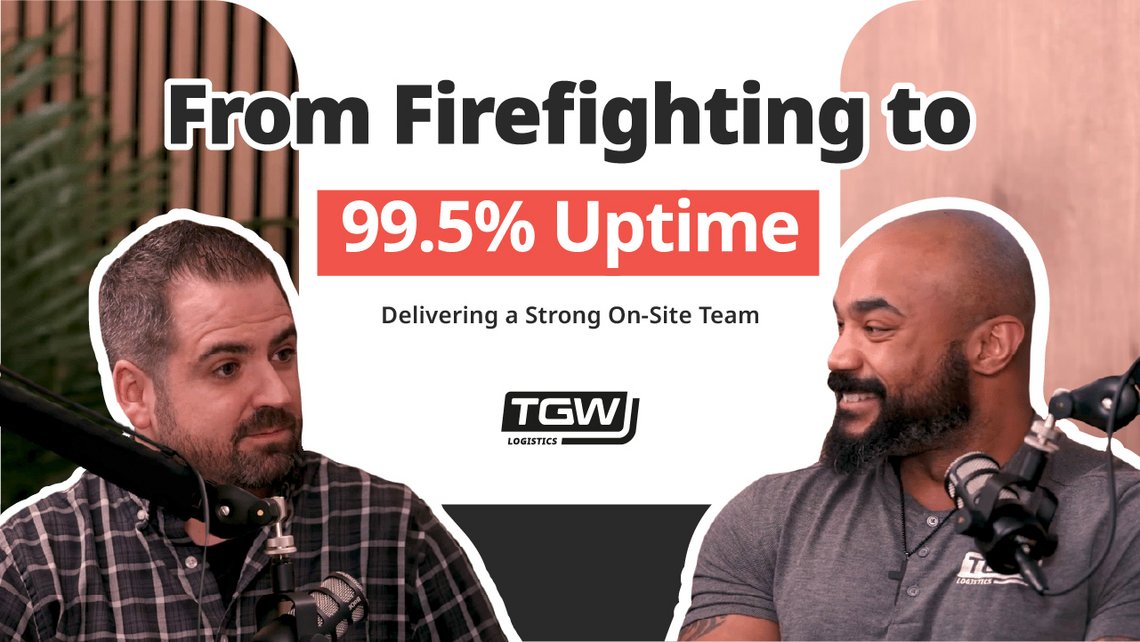
Curious to know more about what it takes to create an effective on-site maintenance team, how to achieve 98%+ systems availability, or capture the most long-term value out of your warehouse automation? Click to watch the “Challenges of Delivering a Strong On-Site Team” episode of our podcast. Mario Sousa and Darwin Vazquez dive into how build up a team, best practices for training, developing team culture, and more.
Integrating Your Onsite Team with TGW Logistics’ Lifetime Services for Long-Term System Health
Integrating your onsite maintenance team with our Lifetime Services strengthens long-term system health and increases operational reliability across your logistics network. Collaboration between internal staff and TGW Logistics’ experts creates a seamless layer of support, keeping onsite staff aligned with the latest system updates, performance standards, and evolving best practices.
Collaborating with our Remote Support and Field Service Teams for regular system audits can help identify potential issues before they impact operations directly and become critical. This proactive approach enables data-driven decisions about key elements of effective logistics planning, including performance, schedules, and system optimization.
By integrating predictive maintenance tools and data analytics, onsite teams can anticipate parts replacement needs and plan interventions before failures occur. This not only prevents costly breakdowns but also extends equipment life and maintains consistency. The result is a long-term maintenance strategy that combines our technical expertise with your on-site team’s operational knowledge, which keeps your systems reliable, efficient, and ready to support changing business demands.
Measuring the ROI of Logistics Support Teams with Clear KPIs and Customer Satisfaction Metrics
It is essential to measure the impact of logistics support teams to demonstrate their value to leadership. This can be done through clear, actionable key performance indicators (KPIs). These not only highlight productivity gains, such as increased throughput, but they also support continued investment in team growth and optimization.
Downtime is expensive. Just one hour can cost your company hundreds of thousands of dollars in revenue, so tracking production uptime, or availability, is a critical metric that resonates with leadership and justifies further resource allocation. Consistently decreasing unplanned downtime reflects the team's ability to support operational continuity, allowing on-time deliveries and meeting customer expectations.
Instead of tracking downtime to measure ROI, your team can track production uptime, or what we call availability. Availability is the percentage of time a warehouse system is technically ready to run, calculated using a weighted, industry-standard model (FEM 9.222) that factors in the criticality of each component and the nature of any downtime events, independent of how much the system is actually used.
![[Translate to North America:] logistics support](/fileadmin/_processed_/3/d/csm_Effective_Onsite_Maintenance_Team_Inner_2_f1199ca4c9.png)
Measuring productivity gains, such as increased throughput and improved order fulfillment rates, demonstrates how maintenance support directly impacts the bottom line. When equipment runs more efficiently, your team can manage higher volumes without added strain on staff, which supports investment in team growth.
Employee retention rates offer valuable insight into team success. High retention indicates strong morale and operational stability, while low turnover suggests an effectively managed and motivated team. Happy, engaged employees are more likely to contribute positively to logistics processes and be open to changes while also preventing disruptions related to staffing changes.
Finally, customer satisfaction metrics, such as order accuracy, delivery speed, and service reliability, are the result of a well-supported logistics operation. These metrics help to link the effectiveness of the onsite maintenance team with customer experience, proving that maintenance services and logistics planning are crucial to meeting both internal and external expectations.
Strengthen Your Onsite Team with Logistics Support Services from TGW Logistics
Your onsite team doesn’t have to carry the full operational load alone. TGW Logistics offers a tailored blend of tools, hotline support, spare parts availability, and field service expertise designed to work alongside your in-house resources. Whether you need strategic backup or a deeper technical bench, we help reduce overhead while accelerating response times.
Our lifecycle-based support approach ensures you maintain the full value of your automation system over time. From predictive maintenance and condition-based diagnostics to expert personnel embedded on-site, TGW Logistics helps stabilize operations and streamline throughput.
Our Field Services team conducts detailed site audits to identify gaps in spare parts inventories, wear-related maintenance needs, and latent risks before they disrupt performance. Whether you’re scaling, stabilizing, or optimizing, our logistics support services are built to flex with your operation.
Let’s talk about how our team can support yours, and why TGW Logistics is the right long-term partner to keep your systems resilient, efficient, and ready.