
The fulfillment landscape has shifted. Operations in retail logistics, grocery logistics, 3PL, and ecommerce now depend on a blend of automated technology and manual processes working in concert. Fully automated facilities remain rare, and fully manual operations struggle to meet modern throughput demands and the oscillation of demand (peak).
This transition places new pressure on managers to synchronize diverse workflows under a single operational strategy. A modern warehouse management system, particularly a next-gen WMS or WES, enables this synchronization by unifying manual and automated processes. Hybrid orchestration, powered by a warehouse execution system, supports the coordination required by modern fulfillment. To future-proof the supply chain and secure a competitive edge, the hybrid model requires a strategic software layer that guarantees consistent ROI and seamless operational resilience across all manual and automated assets.
What Hybrid Warehouse Environments Look Like Now
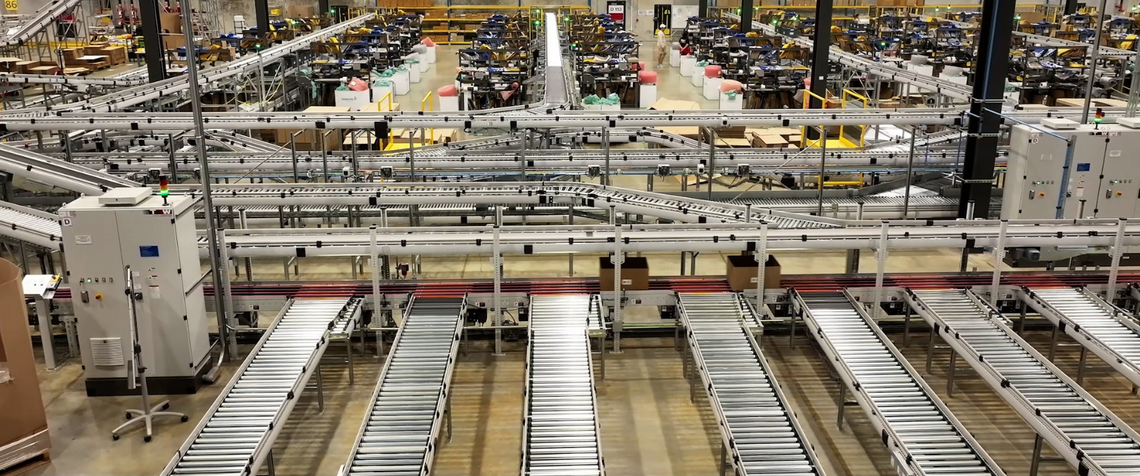
Most warehouses still operate with at least some fully manual processes. However, an increasing number of operations have begun introducing automation in targeted areas, whether through shuttle systems, ASRS, or goods-to-person picking stations. Large or specialty items often remain in manual zones because their size, shape, or handling requirements make full automation impractical.
A grocery distributor, for example, might automate high-velocity ambient goods while reserving manual processes for fragile produce or oversized bulk items. A fashion retailer might automate standard apparel picks but handle oversized, garments on hanger, or fragile items by hand.
The challenge emerges when fragmented systems fail to synchronize order flow, inventory data, and labor assignments. Automation runs in one operational world, and manual teams operate in another when no centralized system connects them.
The Missing Middle: Why Manual Processes Often Break the Automated Flow
When systems fail to communicate, manual "shadow processes" develop. Workers print pick tickets from one system, record completions in another, and reconcile inventory through spreadsheets. These workarounds introduce friction at every handoff and can end up in higher labor and transportation costs.
The consequences compound quickly. Data integrity suffers when inventory counts diverge between automated and manual zones. Orders stall at consolidation points because items arrive at different times from disconnected workflows. Misaligned inventory creates stockouts in one system while another shows available units. Unreliable order releases frustrate downstream operations and either delay shipments or require multiple outbound packages.
Operations run with blind spots when they lack an integrated warehouse management or warehouse execution system. Automated zones optimize themselves while manual areas scramble to keep pace.
How a Warehouse Management System Unifies Manual and Automated Operations
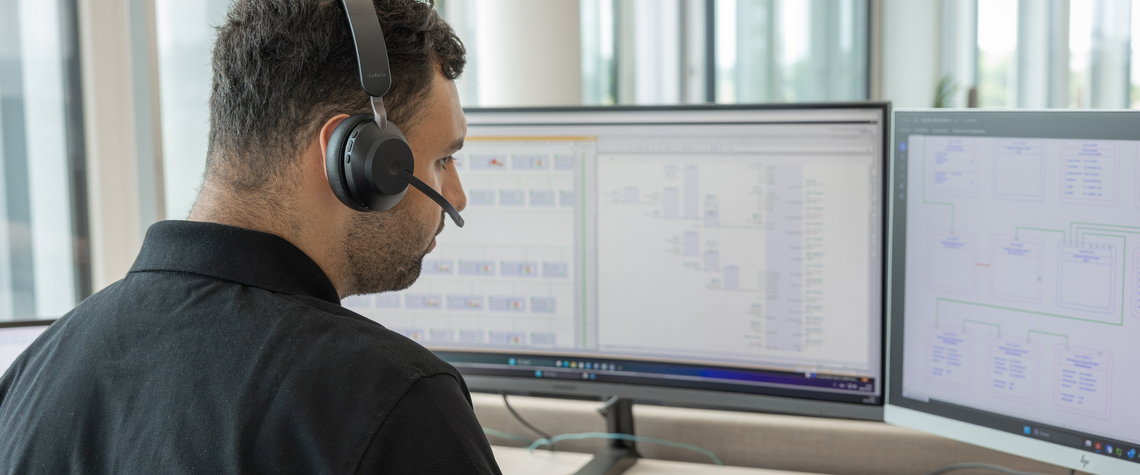
A modern warehouse management or warehouse execution system bridges these gaps by orchestrating sequencing, routing, task management, and workflow across all zones. The software establishes a single source of truth for order orchestration, ensuring that automated equipment and human workers operate from the same data in real time.
This consolidated approach enables consistent order releases regardless of where items originate. A pick task generated for a manual zone follows the same sequencing logic as an automated retrieval. Consolidation points receive items in the correct order for packing and shipping. Inventory accuracy improves because every transaction, whether executed by a robot or a human, updates the same system.
The benefits extend beyond daily operations. Warehouses gain the foundation for continuous optimization because performance data flows from a single source. Managers can identify bottlenecks, measure throughput, and make informed decisions without reconciling reports from multiple systems. These benefits become more pronounced with purpose-built software designed for mixed environments.
What Makes WERX Different: True Hybrid Orchestration
We designed WERX, the WMS, WES, and WCS solution from TGW Logistics, to handle both fully automated and hybrid environments. The WERX platform handles everything from manual picking, pick sequences for non-automated zones, to cross-building coordination for automation with equal capability.
WERX manages operations across fully connected, automated facilities and auxiliary buildings with limited infrastructure. A distribution campus might include a primary building with advanced shuttle systems alongside an overflow facility used for bulky items. WERX hybrid orchestration coordinates both, generating pick sequences for manual workers while synchronizing their output with automated order streams.
Real-time task visibility spans both humans and machines. Managers can view picking progress, order status, and inventory movement across the entire operation from a single interface. The solution adapts to each warehouse's unique configuration rather than forcing operations into a rigid template.
WERX was built to be flexible and modular rather than a static black box. Operations can implement the components they need today and expand functionality as requirements evolve.
Real-World Application: Coordinating Big and Bulky With High Automation
Consider Intersport, a sporting goods operation processing thousands of orders daily. Ninety percent of volume flows through highly automated systems, with shuttles retrieving totes and goods-to-person stations staffed by either human or robotic pickers handling picks. The remaining ten percent includes items that automation cannot handle: canoes, bicycles, surfboards, and oversized fitness equipment.
WERX directs a manual picker through printed or mobile-guided sequences for these bulky items. The system aligns manual picks with automated orders so that all items for a single customer arrive at the consolidation point together. The outbound truck receives a complete shipment rather than split deliveries arriving on different days.
This coordination eliminates the complications that plague disconnected systems. The end customer places one order and receives one delivery. Store associates or consumers avoid tracking multiple shipments with different arrival dates. The business pays for a single order transportation fee. Clean data flows through the operation from order placement to final delivery.
Operational Benefits of Hybrid Orchestration
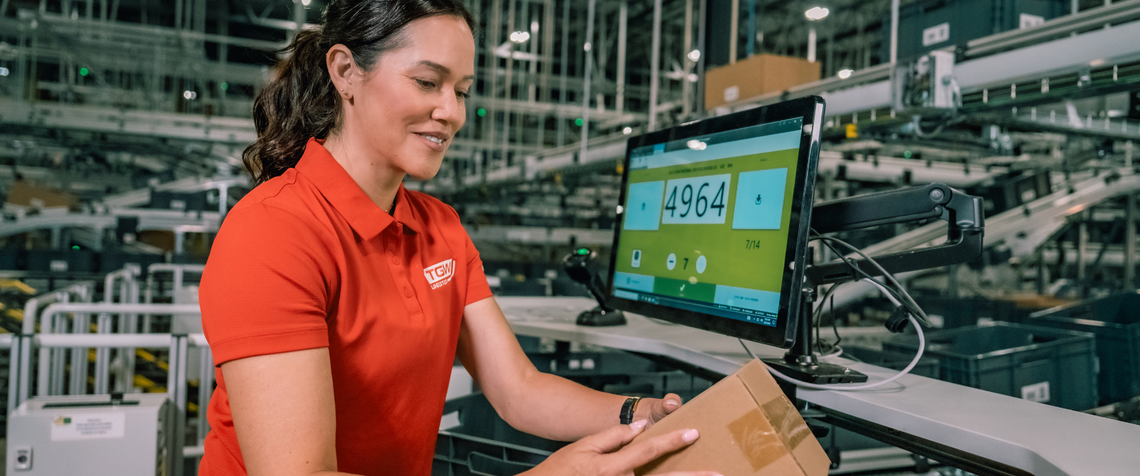
Hybrid orchestration enables operations to automate 80% of tasks that follow standard processes while reserving manual labor for specialized work. Onboarding becomes simpler and workers spend less time walking, searching, and handling items multiple times. The warehouse management system guides each task with optimized pick paths and clear instructions.
Manual areas serve strategic purposes rather than functioning as overflow for inefficient processes. Customized orders, kitting operations, and one-off requests flow through manual zones designed for flexibility. Automated zones handle repeatable, high-volume SKU movement with consistent speed and accuracy.
Bulky and non-stackable items can be stored in overflow or auxiliary buildings while remaining part of the same order stream. Warehouses maximize storage density in automated zones without sacrificing the ability to handle irregularly shaped products. A centralized warehouse management system tracks inventory locations across buildings and zones.
An integrated platform eliminates the system gap that causes mismatches, bad scans, and inventory discrepancies. Every pick, put-away, and transfer updates a single database. End-to-end visibility enables proactive problem-solving before errors reach customers.
How WERX Supports Growth and Gradual Automation
Many warehouses begin their automation journey with manual processes and add technology incrementally. WERX supports this "baby steps" approach by providing a system that works with any blend of manual and automated operations from day one.
A facility can start with WERX managing purely manual workflows, then integrate shuttle systems, AMRs, or goods-to-person stations as business needs evolve. The platform scales without requiring a complete technology replacement. This approach reduces risk and spreads capital investment over time.
Industry research from MHI indicates that adoption of automation technologies continues to accelerate across supply chain operations. Warehouses investing in flexible software solutions position themselves to integrate new capabilities as they become available.
Hybrid Warehouses Need Hybrid Software
True operational performance requires consolidated orchestration across all zones. A modern warehouse management or warehouse execution system serves as the backbone of a scalable, accurate, and efficient hybrid environment. Operations that treat manual and automated areas as separate silos will continue struggling with data gaps, consolidation delays, and inventory errors.
WERX delivers the hybrid orchestration that modern fulfillment demands. The system coordinates human workers and automated equipment through a single source of truth, enabling warehouses to meet customer expectations today while preparing for future automation phases. The path forward runs through integrated software, and we make that path possible at TGW Logistics.
TGW Logistics is a foundation-owned enterprise headquartered in Austria and a global leader in warehouse automation and warehouse logistics. As a trusted systems integrator with more than 50 years of experience, we provide end-to-end services: designing, implementing, and maintaining fulfillment centers powered by mechatronics, robotics, and advanced software solutions.
With over 4,600 employees across Europe, Asia, and North America, we combine expertise, innovation, and a customer-centric dedication to help keep your business growing. With TGW Logistics, it's possible to transform your warehouse logistics into a competitive advantage.