
Key Takeaways
- A high-CAPEX automation system is built to run for ten to fifteen years, but most vendor relationships taper off at go-live, leaving the consultant and the client to operate a system without the partner who designed it.
- A consultant's reputation rides on every year the recommended system runs, not just the day it is commissioned.
- TGW Logistics structures its consultant relationship around the full lifecycle through a five-phase Consultant Engagement Journey: Connect, Collaborate, Enable, Execute, and Continue and Evolve.
- The phases that protect the consultant most are the ones transactional vendors tend to skip: rigorous data analysis up front and a structured support relationship long after go-live.
Most high-CAPEX automation investments get evaluated the way procurement evaluates any purchase. The vendor is chosen, the equipment is specified, and the relationship winds down once the system goes live. For the consultant who recommended it, that moment is where the real demands of logistics consulting begin. The logistics services that keep an automated facility running have to perform for ten fifteen, or even more years, adapt as order profiles shift, and hold up through peak seasons, growth phases, and operational changes the original design never planned for.
When a consultant puts their name behind an automation partner, their reputation rides on every one of those years. A system that looks right at go-live and comes apart in year three reflects on the consultant, not only the integrator who built it.
At TGW Logistics, we build our reputation with logistics consultants around a different premise. The value of an automation partner comes from the quality of the relationship across the full life of the investment, not the polish of the proposal. Our five-phase Consultant Engagement Journey—Connect, Collaborate, Enable, Execute, and Continue and Evolve—defines what that looks like in practice.
Why the Transaction Model Fails Consultants and Their Clients
Automation systems are engineered solutions, built around a specific operation, a specific building, and a specific set of goals. A vendor who sells hardware and steps back during commissioning leaves the consultant and the client with a system they do not fully understand and no one on hand to explain why it was designed the way it was. Treating that as a procurement decision rather than logistics consulting is where the exposure starts.
The relationship between a consultant and a system integrator goes beyond procurement. It is a long-term technical partnership, and the integrator must bring the same rigor and accountability that the consultant brings to their own clients. The gaps in a transactional approach show up at the moments that matter most: the first peak season after go-live, the order profile shift the system was never sized for, and the software update that changes how the warehouse management system talks to the picking logic. None of these are edge cases. They are the normal course of running a complex automated facility over time, and each one tests whether the consultant made the right call.
There is research behind this. A 2020 study in the International Journal of Quality Innovation, drawing on data from 250 South Korean manufacturers, found that trust, satisfaction, and commitment between firms and their logistics providers drive deeper logistics integration, and that this integration improves supply chain and operational performance. The relationship is the mechanism, and performance follows from it.
Phases 1 and 2, Connect and Collaborate: Building the Foundation
Logistics consulting at TGW Logistics starts before any solution is on the table. In the Connect phase, our goal is to understand how consultants work, the challenges their clients face, and the criteria they use to evaluate automation partners on clients' behalf. That conversation shapes everything that follows.
Lunch-and-learns are a primary format here: structured sessions where our team walks through TGW Logistics' capabilities, our approach to problem-solving, and relevant case studies. The point is to give consultants the context to assess fit, not a stack of spec sheets, so we keep the setting informal and the conversation real.
The Collaborate phase deepens that relationship through technology deep dives and Experience Days that move from big-picture capability to working detail. Consultants watch our systems run in live environments, ask the questions their clients would ask, and leave with a clear picture of how a TGW Logistics solution would actually operate. Campfire Talks are a signature touchpoint in this phase: informal, expert-led sessions built around specific operational challenges rather than product pitches. Consultants bring what they are seeing across their client base, our team brings what we are learning across our install base, and both sides come away sharper.
Phase 3, Enable: Data Analysis and Solution Design
The Enable phase is where logistics consulting moves from building the relationship to designing the solution. It begins with a deep dive into data analysis, which serves as the foundation for everything the consultant will present to their client.
The work starts with the operational data: SKU velocity profiles, order history, peak throughput patterns, current system performance, and projected growth. A dedicated team of data consultants works directly with that information, not with filtered summaries, to build a solution design grounded in how the facility actually runs day-to-day, not the tidier version a written brief tends to provide.
What comes out of this phase is a validated model that connects the customer's operational reality to a solution architecture, with the evidence trail to support the investment decision and the transparency for a consultant to present it to their client with confidence. A consultant can walk into a CAPEX approval meeting knowing the analysis behind the recommendation holds up under scrutiny.
Phase 4, Execute: What Partnership Looks Like During Implementation
Execution is where many vendor relationships fall apart. The proposal was won; the project is live; day-to-day management passes to a project team the consultant has never met and the client has no history with. We handle it differently.
Our project teams are part of the logistics consulting relationship rather than a separate function. The context from Connect, Collaborate, and Enable travels into execution, so the team commissioning the system understands the operational priorities and constraints that shaped the design, not only the technical specifications.
Phased go-live planning, pre-commissioning testing via emulation software, and clearly defined escalation paths give the consultant and the client visibility at every stage, rather than only at milestone handoffs. When something has to change mid-implementation—and on a complex automation project, something always does—the relationship is built to absorb it.
Phase 5, Continue and Evolve: The Part of Logistics Consulting Most Vendors Skip
A warehouse automation system commissioned today will be running in a different operation three years from now. Order volumes move, SKU diversity grows, ecommerce fulfillment requirements change, and the system has to keep up. The Continue and Evolve phase is built around that reality.
Ongoing support here goes well beyond a maintenance contract. It is a structured consulting relationship that keeps the system aligned with where the operation is heading. Our nimble support program gives customers and their consulting partners a clear path for system evolution, operational tuning, and proactive adjustment as the business changes.
This is also where the peer relationship from Connect and Collaborate compounds. The more projects we share, the more the exchange is worth in both directions, and both the recommendations and the system designs get sharper. For the consultant, the math is plain: a client whose system still fits five years after go-live becomes a reference, while one that was right at commissioning and never adapted becomes a liability.
A Partner for the Long Haul
A consultant who recommends TGW Logistics should be proud of that recommendation in year one and in year ten. That calls for a partner who understands the operation before writing the proposal, executes through implementation, and stays engaged long after go-live, and who treats the consultant relationship as a two-way exchange rather than a referral pipeline.
If you are evaluating automation partners for a client project, we would like to show you what that looks like in practice. With TGW Logistics, it's possible.
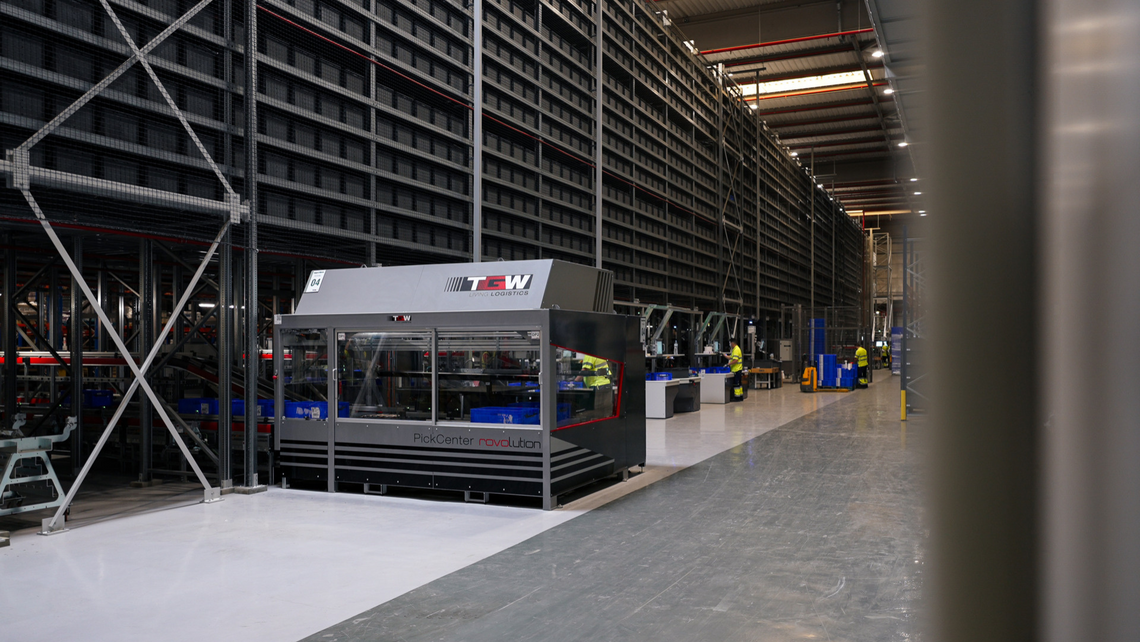
TGW Logistics is a foundation-owned enterprise headquartered in Austria and a global leader in warehouse automation and warehouse logistics. As a trusted systems integrator with more than 50 years of experience, we provide end-to-end services: designing, implementing, and maintaining fulfillment centers powered by mechatronics, robotics, and advanced software solutions.
With over 5,000 employees across Europe, Asia, and North America, we combine expertise, innovation, and a customer-centric dedication to help keep your business growing. With TGW Logistics, it's possible to transform your warehouse logistics into a competitive advantage.