
Three Myths About Warehouse Automation That Are Still Slowing Down Decisions
Key Takeaways
- Three persistent myths about warehouse automation are hindering warehouse leaders from starting their automation journey.
- Automation does not have to take place all at once; phased approaches are less disruptive to current operations and more budget-friendly.
- Implementing the right kind of automation is more important than implementing as much as you can fit or afford. The best results come from automation plans designed with operational realities and future goals in mind.
- Modern automation solutions are customizable and scalable, making upgrades more accessible to mid-market operations than they’ve ever been before.
- TGW Logistics specializes in using a data-informed approach to develop an automation plan fitted to your business needs.
Investment in warehouse automation continues to gain traction in the supply chain space, as companies seek to enhance efficiency and resilience. The 2025 MHI and Deloitte Annual Industry Report shows that 55% of supply chain leaders are increasing their technology investments, while 88% plan to spend over $1 million on automation solutions. Even with that momentum, other businesses that would no doubt benefit from upgrading their warehouse logistics are hesitant to even take the first step in their own automation journeys.
This reluctance can largely be attributed to three principal myths about warehouse automation. Outdated assumptions persist about how automation works, who it’s actually for, and what resources and investments it requires. These misconceptions are obstacles that prevent companies from adopting modern warehouse technology and staying competitive with their peers.
Myth 1: You Have to Automate Everything at Once
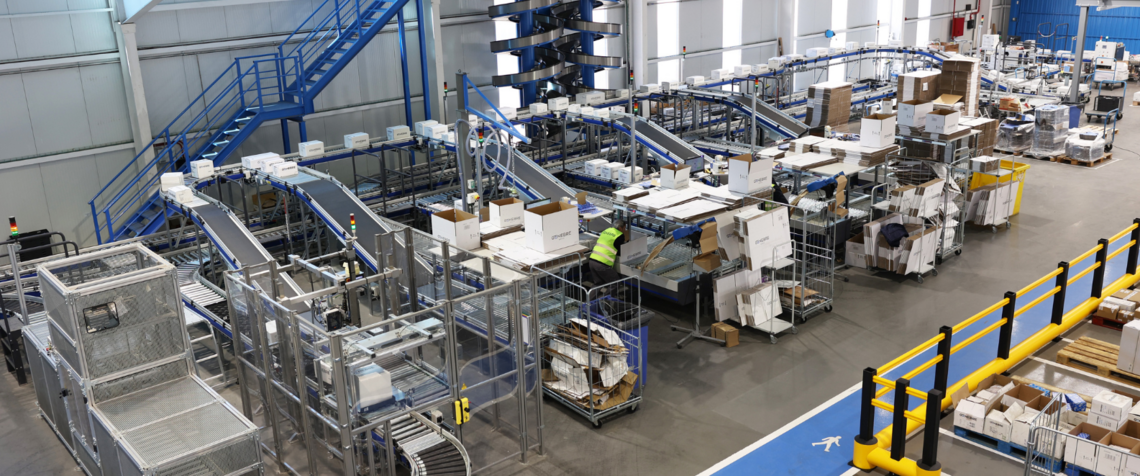
Perhaps the most confining myth forestalling the automation process for careful companies is that automation is an all-or-nothing venture. Many decision-makers incorrectly believe that implementing automation means committing to upgrading to a fully automated facility within a single budget cycle. Therefore, if a single budget cycle can’t support a wholesale upgrade of warehouse operations, the project never gets off the ground.
In reality, phased implementation is a standard approach that enables full automation over time through carefully planned and budgeted steps. Experienced automation partners like TGW Logistics understand that this is the most feasible timeline for most companies and are well-versed in working with clients to construct and execute a step-by-step master plan. Instead of requiring all desired automation solutions to be funded and built at the same time, a phased plan begins with a vision of the full future state of an automated facility and then outlines a sequenced path to that vision that realistically aligns capital deployment with operational readiness and available budget.
This approach significantly decreases risk and allows operations to continue throughout implementation without complete disruption. By introducing automation solutions in stages, operations leaders can validate and streamline performance at each stage before committing to the next, addressing problems as they arise. Issues surface at a manageable pace instead of striking the entire facility all at once. Additionally, as each phase demonstrates its value, the business case for the next phase solidifies. Stakeholders can review actual operational results to guide future upgrades rather than rely on projections alone.
Opening the conversation by asking, “Can we afford to automate everything?” may also end it, or at least table it indefinitely. The more pertinent question to ask is, “What does the right future state look like, and what’s the smartest first step we can take toward it?” This guiding query positions the conversation to explore real-world resolutions to existing problems that your company may be able to begin tackling much sooner than originally assumed.
Recommended Watch
Curious to know our thoughts on what the warehouse of the future might look like? Click to watch the “Warehouse of the Future” episode of our podcast. Stipe Galic and Rebecca Call give their insights into whether or not warehouses will ever be fully autonomous, where AI can deliver the most value, the next competitive advantage, and more.

Myth 2: More Automation Always Means Better Outcomes
The second misconception that can derail automation planning is that more always equals better. This certainly isn’t true in warehouse logistics, where the best solutions are custom-fitted to the company’s unique needs and goals. Piling on the latest equipment and software features without regard to the desired result almost always leads to over-engineered, over-built systems that don’t align with the operation they’re meant to support. Companies that believe this myth often end up with too much capital invested in technology that doesn’t address their pain points. In some cases, unnecessary automation solutions can actively create new constraints on throughput.
The truth is that automation in warehouse logistics always operates at a high performance when it’s fitted for purpose and right-sized to the facility's actual throughput requirements, SKU range, order mix, and operational goals. What improves efficiency at one distribution center may impede material handling at another. In a low-volume distribution operation, a high-speed sortation system adds unnecessary complexity and maintenance requirements rather than accelerating fulfillment. And a simpler, less expensive solution than a fully designed goods-to-person system may provide a better ROI to a warehouse with low SKU diversity and stable order volume.
In building out automation plans, the essential design question to ask is, “Where in this operation does automation actually change the outcome?” That encourages actionable analysis of relevant data rather than a scan of a product catalog. Some areas to consider in this process include:
- What are the current throughput numbers?
- Where are the bottlenecks?
- What are the labor costs centers?
- What are the growth projections for volume and SKU complexity?
In their 2025 report, MHI and Deloitte note that warehouse automation should not be considered a one-size-fits-all solution. Rather, the defining element of successful automation implementation is gaining a thorough understanding of the company’s operations, supported by accurate, concrete data in the early stages. At TGW Logistics, we apply that same principle by collaborating with operations experts and warehouse leaders for a full-scale analysis before deciding on any solutions.
Myth 3: Automation Is Only for Enterprise-Scale Warehouse Operations
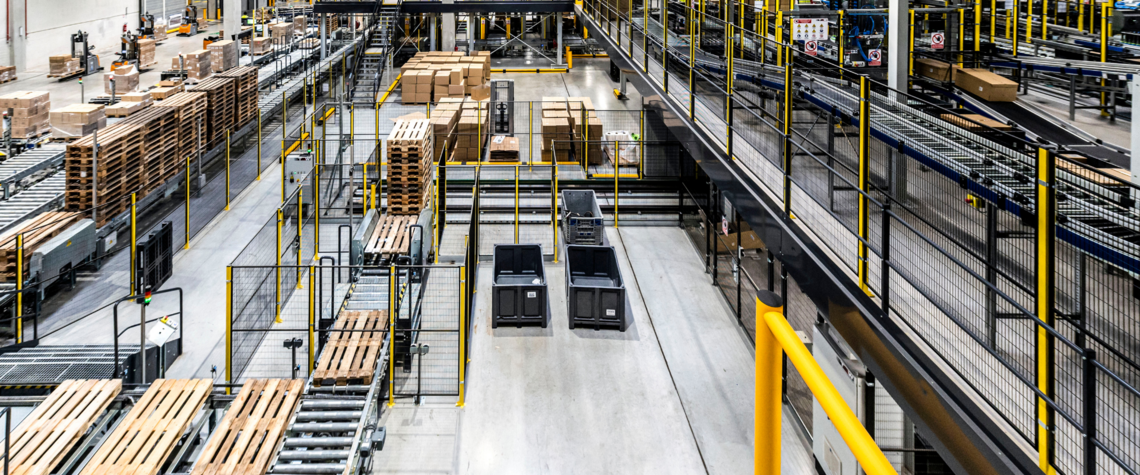
The final common myth we’ll address here is one rooted in the history of warehouse operations. While early incarnations of warehouse automation were expensive, rigid, and required infrastructure investments that only large operations could support, that is no longer true. Automation solutions are customizable and scalable, allowing regular operations to continue while they’re being implemented and tested. The pace of automation adoption in the mid-market is accelerating so quickly that waiting for your operation to “fit” that antiquated idea is a competitive risk in itself.
MHI and Deloitte found that technological advancement and decreasing costs in the logistics sector have made warehouse automation accessible to mid-sized market players. The crucial shift has been the prioritization of modularity and flexible design. Now, warehouse logistics systems can start small and expand incrementally as needed, eliminating the necessity of a full facility redesign that eats up budget and grinds operations to a halt. With so many customizable options, the minimum viable investment for automation has plummeted.
In the realms of consumer goods logistics and retail logistics operations, the increasing rate of mid-market automation adoption is also driven by the same challenges that enterprise operators have been managing for decades. Faster fulfillment expectations, broader SKU diversity, and omni channel order complexity that manual operations struggle to absorb at volume are all factors driving mid-market companies towards automation solutions. Customer expectations don’t scale with warehouse size; customers expect fast, accurate delivery, no matter where the order is being fulfilled.
TGW Logistics designed modular systems, including FlashPick and LivePick, with these expectations in mind. Facilities don’t have to take on more technology than they need before they need it. Both solutions allow warehouses to get started with a configuration that suits their current volume, with the freedom to scale up operations as order volume grows or SKU catalogs become more diverse.
Automation in Warehouse Logistics Isn't One Decision, but a Series of Them
The three myths dismantled here are limiting misconceptions that share a common root. Each of them arises from seeing automation as a single, massive, and irreversible decision. The many clients who’ve partnered with TGW Logistics to format a phased, right-sized investment know that this isn’t true. When the core misunderstanding is exposed, warehouse automation is revealed as being accessible to more companies and operations than historical wisdom may suggest.
That doesn’t mean that the ideal end result is irrelevant, however. The companies seeing the most benefit from their automation journey began with a clear vision of where they wanted their warehouse operations to go and a practical starting point. That’s why our process starts with understanding your operational realities, throughput demands, and long-term growth output.
If you’re ready to explore a custom-fitted automation approach, reach out to TGW Logistics today and start the conversation.
TGW Logistics is a foundation-owned enterprise headquartered in Austria and a global leader in warehouse automation and warehouse logistics. As a trusted systems integrator with more than 50 years of experience, we provide end-to-end services: designing, implementing, and maintaining fulfillment centers powered by mechatronics, robotics, and advanced software solutions.
With over 5,000 employees across Europe, Asia, and North America, we combine expertise, innovation, and a customer-centric dedication to help keep your business growing. With TGW Logistics, it's possible to transform your warehouse logistics into a competitive advantage.