
In modern material handling strategy, the goal is straightforward. Have the right item available to the right operator at the right time, with speed, accuracy, and consistency. That is also the promise behind a goods-to-person system, with the added bonus of eliminating travel time of operators. But not every operation needs the same architecture to get there. Building constraints, throughput expectations, SKU variety, and future growth all shape which solution makes the most sense.
When companies first engage with TGW Logistics, they often want clarity on how LivePick and FlashPick differ. From there, the right path usually becomes clear once the specific project requirements come into focus. Both are goods-to-person systems, but they are built for different operational realities. They solve the same core challenge in different ways. Selecting the right one starts with understanding how each system performs under specific conditions, and how well that profile matches the facility today and over the next several years.
Two Systems, Two Operational Profiles
At a high level, LivePick and FlashPick support the same outcome. They bring inventory to operators instead of sending people across the floor to search for it. That approach cuts travel time, supports faster picking, and creates a more controlled fulfillment process. But the way each solution gets there is very different.
LivePick is a modular storage system designed around agility. It uses robotics to connect the process chain, allowing storage capacity and performance capacity to scale independently. LivePick gives growing operations more control over how they scale. Its greater granularity allows customers to align the initial investment more closely with current needs, whether that means starting with a 3K, 6K, or 12K system and expanding over time. It also works in buildings up to 12 meters in height, making it practical for facilities that cannot accommodate a taller automation footprint.
FlashPick is built for sustained, high-volume performance. It uses the full vertical potential of the building, up to 30 meters, and coordinates shuttles, lifts, conveyors, and workstations in a tightly integrated flow. That architecture supports high SKU counts and high order volumes with predictable throughput over long operating windows.
This distinction matters because both systems address the goods-to-person challenge under very different operating conditions. The better fit depends less on preference and more on what the operation actually needs, including where the business is headed next.
Where LivePick Fits Best
LivePick is a strong fit for operations that need adaptability more than maximum throughput. That includes facilities with changing order profiles, companies still refining their long-term growth plans, and sites where building height limits make a taller system unrealistic.
Its modular design is one of its biggest strengths. Storage and performance can expand separately, so businesses can add capacity in line with actual demand rather than investing upfront for a peak that may still be years away. That phased approach can be attractive for operations in transition, especially when leadership wants automation that supports growth without locking the business into a rigid footprint too early.
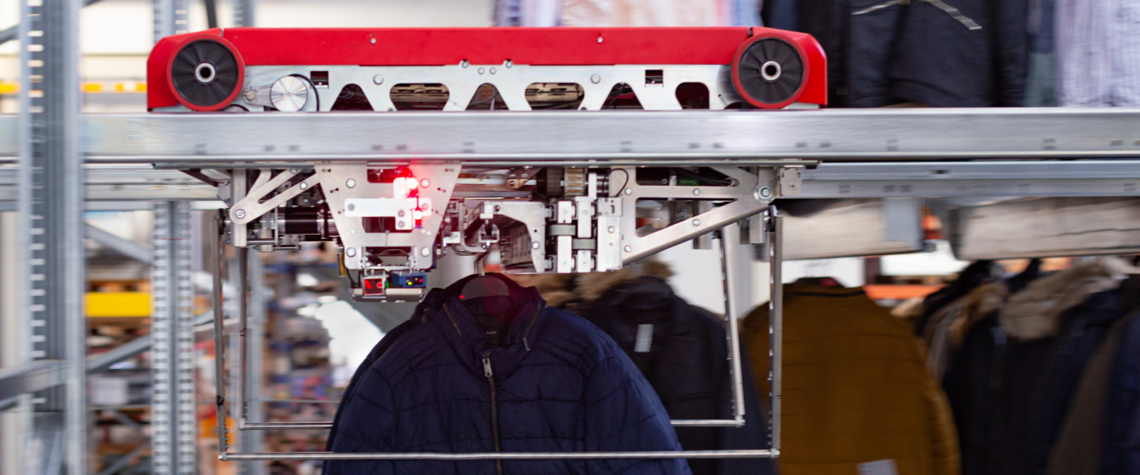
This flexibility is especially relevant in fashion logistics. Fashion operations often deal with rapid SKU turnover, seasonal surges, frequent assortment changes, and shifting channel demand. A system that can adapt as inventory behavior changes can help operators stay responsive without reworking the entire fulfillment model. LivePick supports that kind of environment by giving the floor more room to evolve over time.
Another advantage is implementation speed. A modular system can often move from planning to operation faster than a larger, full-height architecture. For operations that need to act quickly, that can be a major factor in the business case.
The tradeoff is that LivePick is not built to deliver the same sustained high-volume output as FlashPick. LivePick is designed for scalable, space-efficient deployment across a wide range of warehouse layouts. Based on learnings from previous projects, it can adapt to different facility constraints, while FlashPick is typically strongest in long-aisle configurations. For facilities that have already reached a mature scale and need steady performance across extended shifts, that throughput ceiling becomes more important.
Where FlashPick Fits Best
FlashPick is designed for operations with well-defined requirements and a clear volume profile. It works best where order demand is high, SKU counts are large, and the facility can support a full-height automated system.
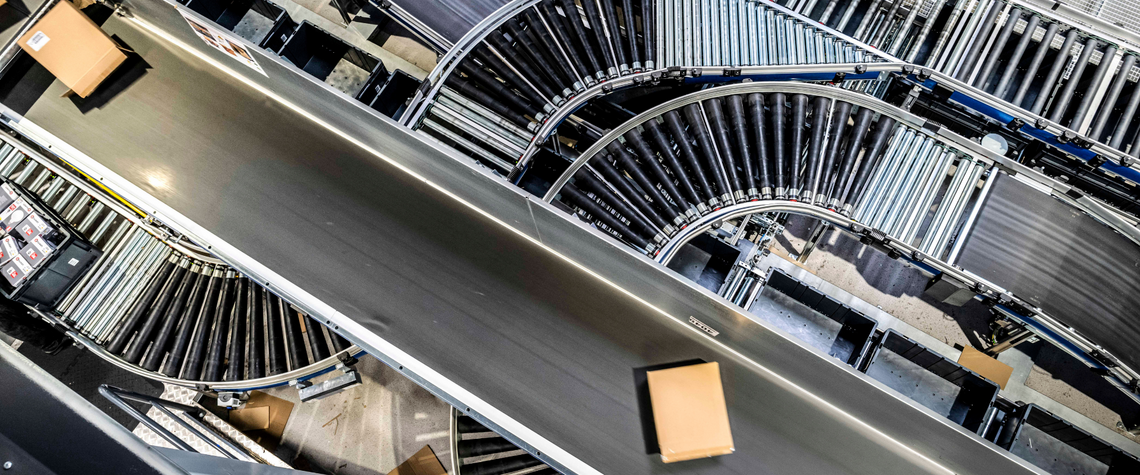
Its strength comes from coordinated flow. Shuttles, lifts, picking stations, and conveyor sequencing work together to move products quickly and consistently. That system-wide orchestration supports predictable throughput, which matters when service levels are tight, and output targets are not optional.
This makes FlashPick especially compelling in industrial logistics and consumer goods logistics, where operations often need reliable performance across steady demand patterns. In these environments, the value of automation is not just speed. It is repeatable labor efficiency and the ability to hit volume targets at a low operating cost over a long service life.
FlashPick also deserves a more precise description of its flexibility. It is easy to assume that a high-throughput system is less adaptable, but that is not the case here. FlashPick is operationally flexible. One shuttle engine combined with picking stations and conveyor sequencing can support different mixes of ecommerce, retail, and wholesale demand. It can also accommodate more SKUs and changes in order profiles over time.
What FlashPick needs is sufficient and relatively consistent total volume to justify its architecture. If an operation has meaningful demand across multiple sales channels and expects that demand to continue at scale, FlashPick can support that complexity very well. If total demand is smaller or highly unpredictable, LivePick may be the better fit.
Making the Goods-to-Person Decision
The choice between LivePick and FlashPick is not about identifying the “better” system in the abstract. It is about matching the right system to the right operational profile.
Four variables tend to drive that decision:
- First, consider building height and available space. LivePick can adapt to a wide range of warehouse environments and works especially well in square layouts, while FlashPick is typically more efficient in facilities with longer aisles. If the building has limited vertical space, LivePick may be the more practical route. If the facility can take advantage of full-height automation, FlashPick opens a different level of density and throughput.
- Second, consider pick station performance and operational cost. FlashPick with PickCenter One delivers the highest available picking performance, helping reduce labor costs. A business should look not only at today’s order volume, but also at where that volume is likely to land over the next several years. A system that works well now but creates bottlenecks later can become an expensive compromise.
- Third is SKU volume and variability. Some operations manage broad assortments with frequent turnover. Others handle large catalogs with more stable movement patterns. That difference affects whether modular agility or sustained high-density performance will create more value.
- Fourth is growth trajectory. This may be the most important consideration. Growth is not only about selling more. It can also mean adding sales channels, entering new geographies, expanding customer segments, or changing fulfillment models. Businesses need to think about how they expect the operation to change, not just how much they expect it to grow.
According to industry research from MHI, automation investment continues to rise as warehouses pursue greater resilience, scalability, and labor efficiency. External reporting also points to strong momentum in warehouse automation adoption as distribution networks face more pressure to deliver speed and flexibility. Those trends make the solution fit even more important. A warehouse automation decision should support the business model that is taking shape, not just the one that exists today.
Matching the System to the Operation
LivePick and FlashPick represent two distinct answers to the same fulfillment challenge. LivePick is built for operations that need room to adapt. FlashPick is built for operations that need sustained high-throughput performance while still maintaining operational flexibility across channels and order profiles.
That match matters. When the architecture aligns with the building, the demand pattern, and the business plan, the system can perform as intended for years. When the match is off, the operation ends up working around its automation instead of benefiting from it.
For decision-makers evaluating a goods to person strategy, the right question is not which system sounds more advanced. The right question is which one aligns with the facility’s current reality and its expected future state. That is where the strongest returns come from, and that is where TGW Logistics can help operations build a fulfillment center that supports both current performance and future growth.
![[Translate to UK:] Shuttle systems are a key technology component used within many material handling GTP systems to facilitate the process of bringing items to the picker.](/fileadmin/_processed_/6/c/csm_DIYhome_improvement_Blog_Header__9769adb897.png)
TGW Logistics is a foundation-owned enterprise headquartered in Austria and a global leader in warehouse automation and warehouse logistics. As a trusted systems integrator with more than 50 years of experience, we provide end-to-end services: designing, implementing, and maintaining fulfillment centers powered by mechatronics, robotics, and advanced software solutions.
With over 5,000 employees across Europe, Asia, and North America, we combine expertise, innovation, and a customer-centric dedication to help keep your business growing. With TGW Logistics, it's possible to transform your warehouse logistics into a competitive advantage.