
The new national distribution center of Intersport France in Saint-Vulbas shows how scalable warehouse automation and goods-to-person systems are reshaping retail logistics performance, flexibility, and resilience.

Blog Post
Warehouse Automation in Retail Logistics: How INTERSPORT France Scales Performance with TGW Logistics

When growth outpaces warehouse logic
Retail networks are under constant pressure to synchronize expanding assortments, rising omnichannel demand, and increasingly volatile seasonal peaks. In this environment, warehouse automation is no longer a productivity upgrade—it becomes a structural requirement for stable warehouse operations.
For sporting goods retailers like INTERSPORT France, operating nearly 1,000 stores across France, the challenge is not only throughput. It is consistency: ensuring that every store receives the right products at the right time, even when demand patterns shift unpredictably.
This is precisely where advanced system design, driven by warehouse automation, reshapes the operational backbone of retail logistics.
A new benchmark for retail fulfillment in Saint-Vulbas
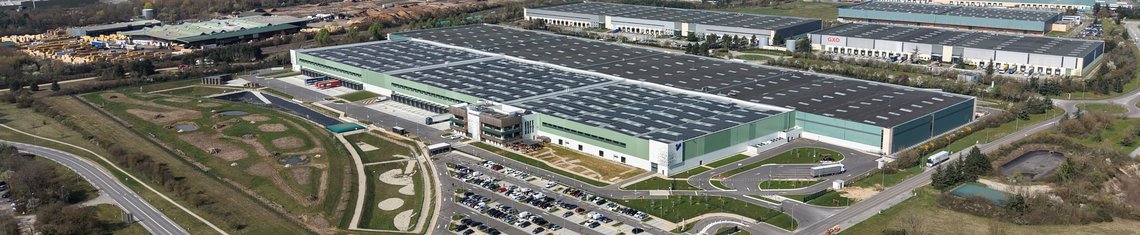
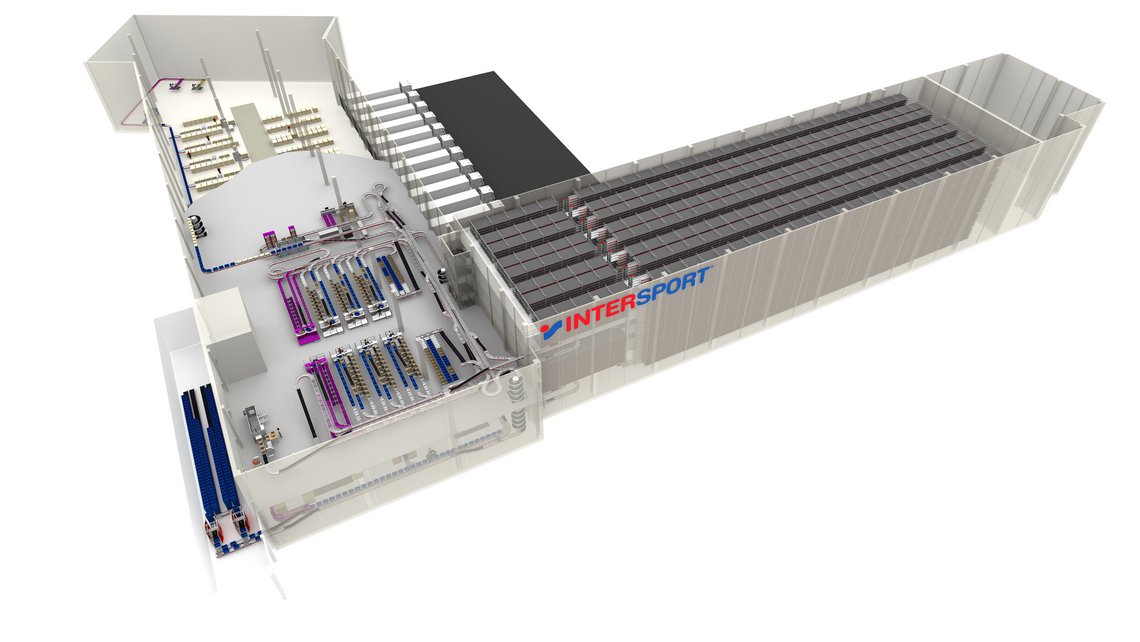
At the new national distribution center in Saint-Vulbas, INTERSPORT France has implemented a highly automated fulfillment architecture delivered with TGW Logistics.
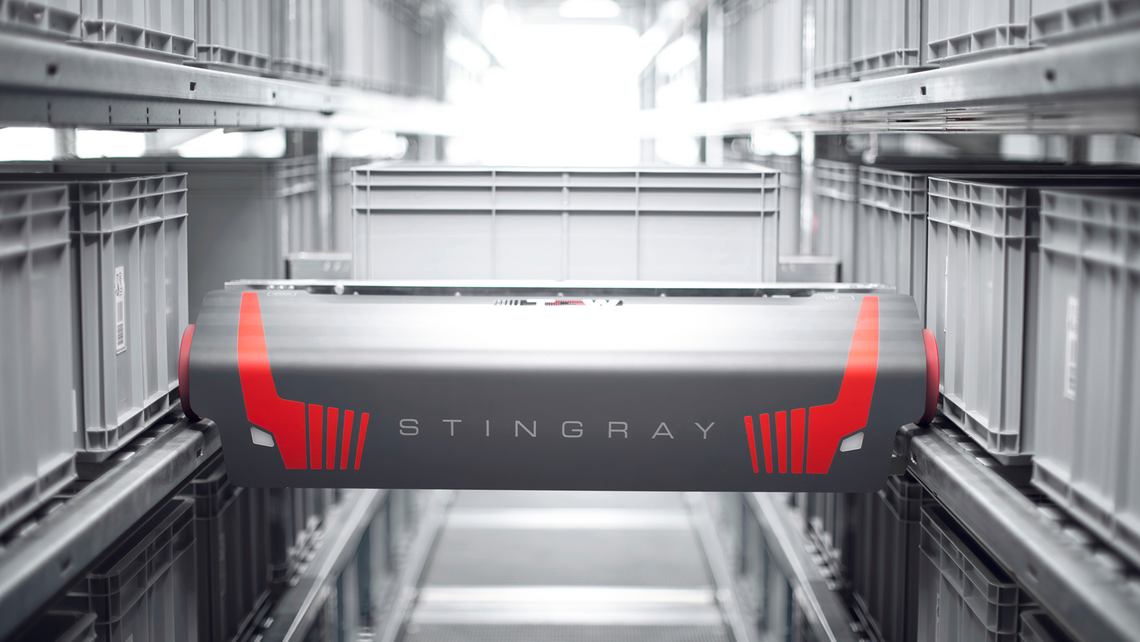
The solution is built around a goods-to-person strategy using FlashPick technology, designed to stabilize performance across peaks while maintaining scalability for future expansion in retail logistics environments.
At its core, the system combines:
- A ten-aisle shuttle warehouse with more than 80,000 storage locations
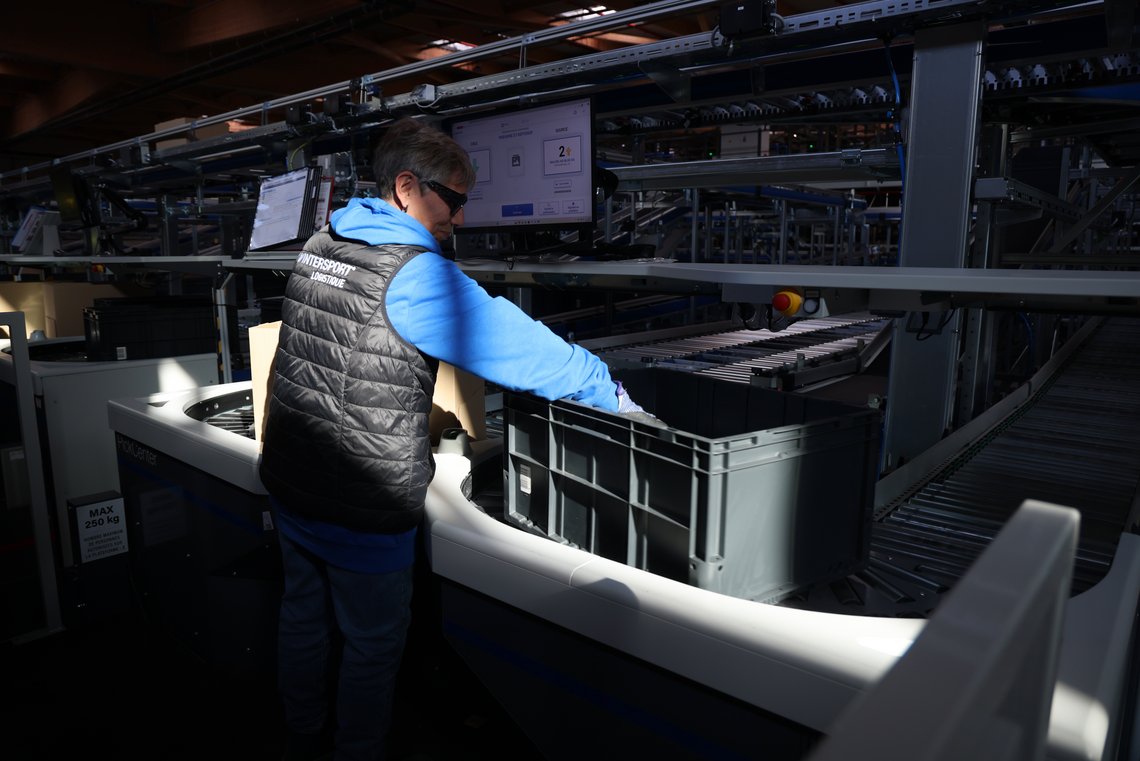
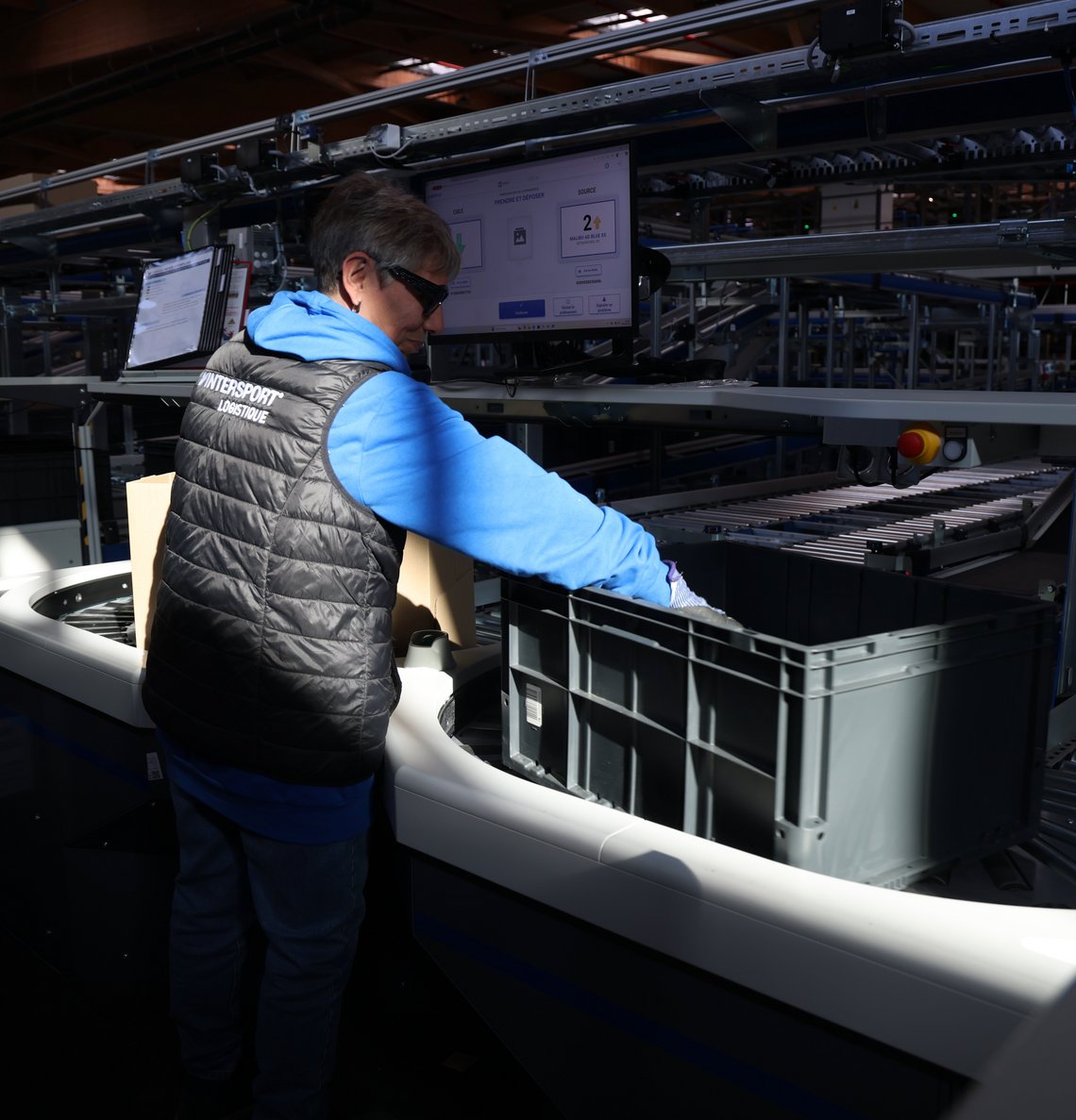
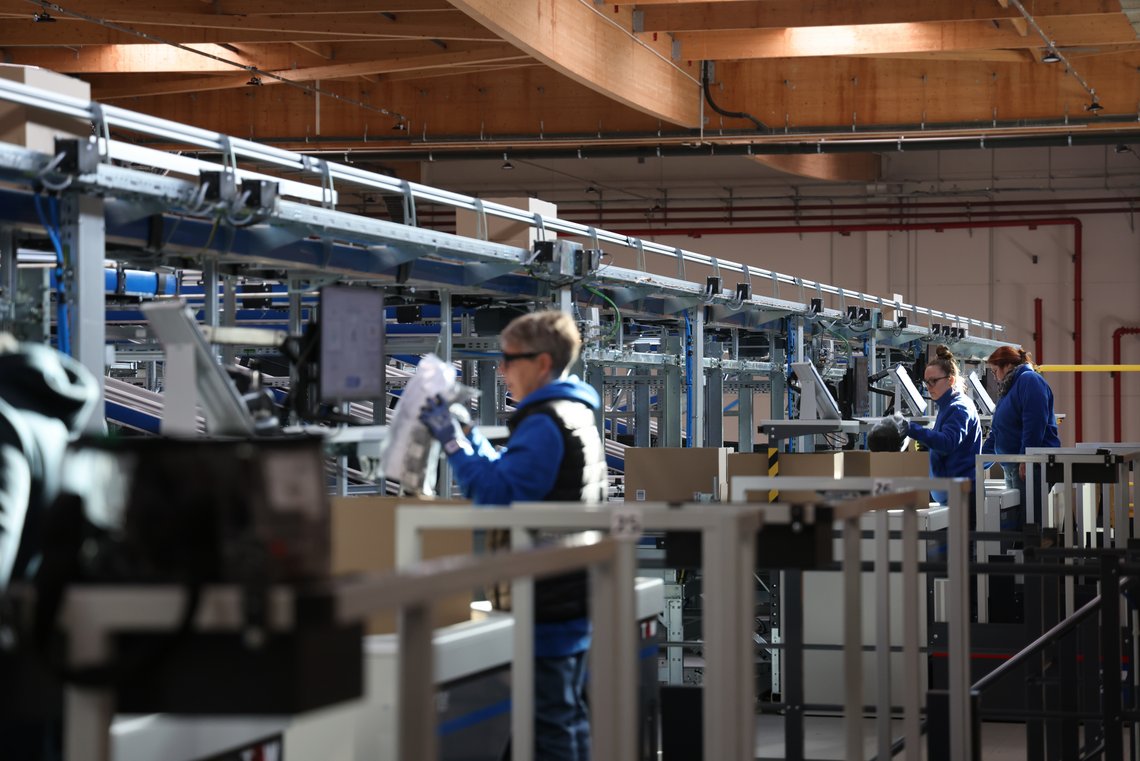
- 18 ergonomic picking workstations supporting high-density order fulfillment
- A three-aisle consolidation shuttle for dispatch preparation
- Autonomous palletizing through robotics handling up to 1,500 cartons per hour
This architecture demonstrates how warehouse automation moves beyond isolated mechanization toward fully orchestrated warehouse logistics ecosystems.
Warehouse automation as a structural response—not a tool
The shift at INTERSPORT France reflects a broader trend: retailers are no longer asking whether to automate, but how deeply automation should be embedded into their warehouse operations.
Traditional setups rely heavily on manual picking and fragmented logistics planning, which limits scalability during peak demand. In contrast, integrated warehouse automation enables:
- Stable throughput under variable load conditions
- Reduced dependency on manual handling during peak seasons
- Higher predictability in outbound logistics performance
- Improved ergonomics across all touchpoints
The Saint-Vulbas design illustrates how warehouse automation functions as a control system for complexity rather than a simple efficiency lever.
Technology integration: from systems to orchestration
Modern retail fulfillment is defined not by single technologies, but by their interaction within a unified system architecture.
In Saint-Vulbas, the combination of warehouse robots, shuttle systems, and intelligent control layers forms a tightly integrated execution environment. A warehouse management system and supporting logistics software coordinate inventory positioning, picking logic, and sequencing for dispatch.
Key enabling technologies include:
- Automated storage and retrieval system logic for high-density storage
- Conveyor systems linking storage, picking, and dispatch zones
- Robotics for palletizing and order consolidation
- Software-driven synchronization of inbound logistics and outbound logistics flows
When combined, these systems elevate warehouse automation from mechanical execution to dynamic orchestration across the full warehouse logistics network.
Operational reality: flexibility under pressure
Retail logistics is fundamentally shaped by volatility—seasonality, promotions, and shifting consumer behavior. For INTERSPORT France, this meant designing a system capable of absorbing uncertainty without compromising service levels.
The implemented solution supports:
- Rapid store replenishment cycles
- Stable performance during seasonal peaks
- Scalable expansion pathways without redesigning core infrastructure
- Higher consistency in order fulfillment across distribution channels
These capabilities directly impact supply chain optimization, especially in networks where service reliability is a competitive differentiator.
The design also reflects a forward-compatible approach to end-to-end logistics, ensuring that future omnichannel requirements can be integrated without structural disruption.
Human systems and automation: a deliberate balance
A critical aspect of modern warehouse automation is not replacement, but augmentation. The ergonomic design of picking stations reduces physical strain, while robotics handle repetitive and high-intensity tasks such as pallet building.
This division of labor improves both performance and workforce sustainability across warehouse operations. It also reinforces a core principle in advanced logistics design: resilience is achieved when human expertise and system intelligence operate in alignment.
In practice, this means:
- Operators focus on decision-rich tasks
- Systems manage repetitive execution flows
- Automation absorbs variability at scale
- Humans maintain control over exceptions and quality
Strategic outcome: scalability as a competitive advantage
The results achieved at Saint-Vulbas demonstrate the compounding effect of integrated warehouse automation:
- Order processing productivity increased significantly
- Palletizing performance multiplied
- System stability maintained under operational ramp-up conditions
More importantly, the architecture provides long-term adaptability. For a retail network of INTERSPORT France’s scale, this flexibility is essential to maintaining competitiveness in evolving market conditions.
The project illustrates how warehouse automation is increasingly tied to strategic positioning rather than operational efficiency alone.
Designing logistics for continuous change
Retail supply chains are entering a phase where stability is no longer defined by fixed capacity, but by adaptability under continuous change.
The Saint-Vulbas fulfillment center shows how integrated warehouse automation enables this shift. By combining robotics, intelligent control systems, and scalable architecture, retail logistics becomes less about reacting to demand and more about structurally absorbing it.
For modern networks, the question is no longer how to optimize a warehouse in isolation—but how to design warehouse automation as a living system within a broader, resilient supply chain
Talk to an expert!
Raffaele Destro is VP of Business Development for Fashion at TGW Logistics, with decades of global experience in automation and supply chain optimization.
Interested in collaborating or learning more?

TGW Logistics is a foundation-owned enterprise headquartered in Austria and a global leader in warehouse automation and warehouse logistics. As a trusted systems integrator with more than 50 years of experience, we provide end-to-end services: designing, implementing, and maintaining fulfillment centers powered by mechatronics, robotics, and advanced software solutions.
With over 5,000 employees across Europe, Asia, and North America, we combine expertise, innovation, and a customer-centric dedication to help keep your business growing. With TGW Logistics, it's possible to transform your warehouse logistics into a competitive advantage.