

Navigation technology for mobile robotics has evolved rapidly over the past decade. Magnetic tape lines and inductive wires once dictated how automated guided vehicles moved through a facility, but modern systems have largely moved beyond those constraints. Advanced warehouse robots now rely on contour navigation, virtual mapping, and precision positioning aids. That evolution is significant, but successful deployment depends equally on facility readiness. Physical infrastructure, floor quality, power distribution, and spatial design all influence how reliably a robotic fleet performs over time. Operations leaders who plan for these factors protect uptime, reduce risk, and accelerate return on material handling investments. The industrial potential of robotics continues to grow across every sector, making proper building preparation more critical than ever.
Understanding Facility Readiness for Warehouse Robots
Deploying mobile robotics requires evaluating the building as a dynamic operating environment rather than a static floor plan. Traffic flow, load handover zones, vertical storage interfaces, and human activity patterns all factor into how well a robotic fleet performs once live. Infrastructure decisions made during the planning phase affect fleet scalability, maintenance complexity, and long-term flexibility. A facility that supports ten autonomous vehicles today may need to support thirty within a few years, and the foundation for that growth starts with the original design.
Early planning minimizes costly retrofits and operational disruptions. Operations teams that treat facility readiness as a phased discipline, rather than a one-time checklist, position themselves for sustained performance as their automation strategy matures.
Floor Conditions and Surface Requirements
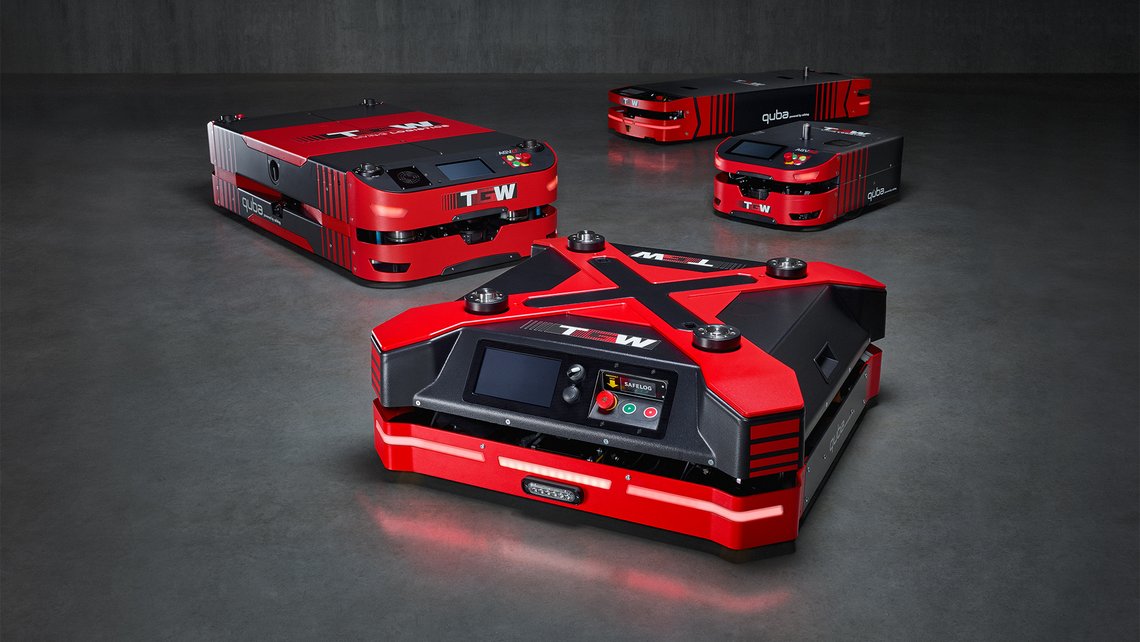
Modern warehouse robots no longer require inductive wires or continuous magnetic strips embedded in the floor. Contour navigation and virtual mapping allow automated guided vehicles to orient themselves using fixed reference points within the building, such as columns, racks, and conveyor structures. These vehicles build an internal virtual map of the environment during engineering, then use onboard sensors to continuously confirm their position. Reflector targets enhance positioning accuracy at critical handover zones where robots lift or deposit loads. This shift has dramatically reduced the need for invasive floor preparation.
Surface quality still matters. Uneven floors can accelerate wheel wear and affect sensor calibration. Highly reflective or heavily damaged flooring may interfere with vision-based navigation systems. Cracks, joints, and inconsistent surface coatings can introduce navigation drift over time. Facilities should assess floor flatness and condition before deployment begins.
New facilities offer the greatest flexibility. Robot flow patterns, aisle widths, and reference points can all be designed from the outset. Charging infrastructure and safety zones are integrated into the layout before operations begin, eliminating the need for disruptive retrofits after go-live. Teams can plan material handling traffic during construction, which simplifies long-term scalability and reduces the likelihood of costly modifications later. Floor specifications, electrical capacity, and ceiling clearances all align with the robotic solution from day one.
Retrofit environments present a different set of challenges. Floor condition is rarely the primary constraint. Existing layout limitations, such as tight aisles, manual staging areas, and legacy traffic patterns, often demand more attention. Reconfiguring zones to accommodate automated travel paths while keeping live operations running adds complexity that greenfield projects avoid entirely. Reference markers or targeted positioning aids can be added selectively without reworking entire floors, and localized magnetic tape at key handover points remains a practical option for precision positioning.
Long-standing manual workflows shape how employees interact with automated guided vehicles, and the shift to shared pathways demands clear communication and defined traffic rules. Warehouse robots operate most effectively when the people around them understand and trust the technology. Mindset shifts can be more challenging than physical adjustments, making change management a critical component of any retrofit deployment. Clear communication about the purpose of automation, paired with hands-on training, helps workers adapt to new traffic patterns and shared spaces.
Charging Infrastructure and Power Planning
Charging strategy plays a direct role in fleet availability and facility layout. The right approach keeps warehouse robots operational during peak demand without creating congestion or pulling vehicles out of service for extended periods.
Modern warehouse robots commonly rely on in-process charging rather than centralized charging stations. Small wireless charging plates, roughly 12 inches square and about half an inch thick, can be installed at strategic points along normal travel routes throughout a facility. These compact pads function similarly to a wireless phone charger, allowing robots to recharge incrementally during standard task flow rather than routing to a dedicated dock. Distributed charging reduces congestion, supports continuous operation, and requires only standard electrical connections at each pad location.
Power demand per unit is relatively modest compared to traditional heavy automation equipment. However, fire codes and electrical regulations vary by region, and teams must evaluate compliance requirements early in the planning process. Industry forecasts project significant growth in robotic fleet management over the coming years, which means power infrastructure should account for future expansion from the start. Compliance planning prevents delays during commissioning and protects against costly rework.
TGW designs layouts that comply with all applicable norms and regulations, building those requirements into the engineering phase so they never become a barrier at startup.
Scaling Considerations for Growing Fleets
Infrastructure should support future fleet expansion without significant reconstruction. Software-based routing adjustments enable operational changes without floor modifications, allowing teams to scale by reconfiguring digital pathways rather than physical ones. This flexibility means a facility can adapt to shifting demand patterns, seasonal peaks, and new product profiles without tearing up what already works.
Charging density and traffic modeling must account for peak demand scenarios. Facilities designed for growth avoid bottlenecks as fleet sizes increase. Early planning protects flexibility, and teams that build scalability into the original design reduce the total cost of future expansion. Fleet management software plays a key role in orchestrating this growth efficiently across larger vehicle populations.
Spatial Workflows, Traffic Design, and Safety Systems
Warehouse robots operate most efficiently in clearly defined traffic corridors. Mixed environments require thoughtful separation between pedestrian zones and robot pathways. Cross-traffic points should be minimized or clearly marked, and high-frequency transfer areas may benefit from precision positioning aids. Vertical storage integration must align with robot reach and load specifications, because mismatches between racking height and vehicle capability create manual intervention points that reduce throughput. Layout adjustments across all of these areas can improve performance without expanding square footage.
Modern automated guided vehicles incorporate safety sensors that stop movement when obstacles are detected. These systems rely on predictable human behavior and defined travel rules. Operators must understand reaction distances and stopping behavior, because sudden, unexpected movement can exceed a vehicle's braking capability, just as a car cannot stop instantly when a pedestrian steps off the curb. Training reinforces safe coexistence, and predictable routing builds trust across the warehouse floor. Guidance technology works best when the surrounding environment supports it.
Facility Preparation as a Strategic Material Handling Decision
Preparing a facility for warehouse robots requires balancing physical readiness with operational alignment. Floor conditions, charging strategy, and traffic design all shape long-term reliability. The decisions operations teams make during the planning phase determine whether advanced material handling systems deliver sustained performance or short-term gains. Infrastructure planning that aligns with automation strategy turns the building itself into a competitive advantage.
TGW Logistics engineers facility-ready mobile robotics solutions as part of a complete fulfillment strategy. Connect with our team to evaluate building readiness and plan for scalable automation.

TGW Logistics is a foundation-owned enterprise headquartered in Austria and a global leader in warehouse automation and warehouse logistics. As a trusted systems integrator with more than 50 years of experience, we provide end-to-end services: designing, implementing, and maintaining fulfillment centers powered by mechatronics, robotics, and advanced software solutions.
With over 4,600 employees across Europe, Asia, and North America, we combine expertise, innovation, and a customer-centric dedication to help keep your business growing. With TGW Logistics, it's possible to transform your warehouse logistics into a competitive advantage.